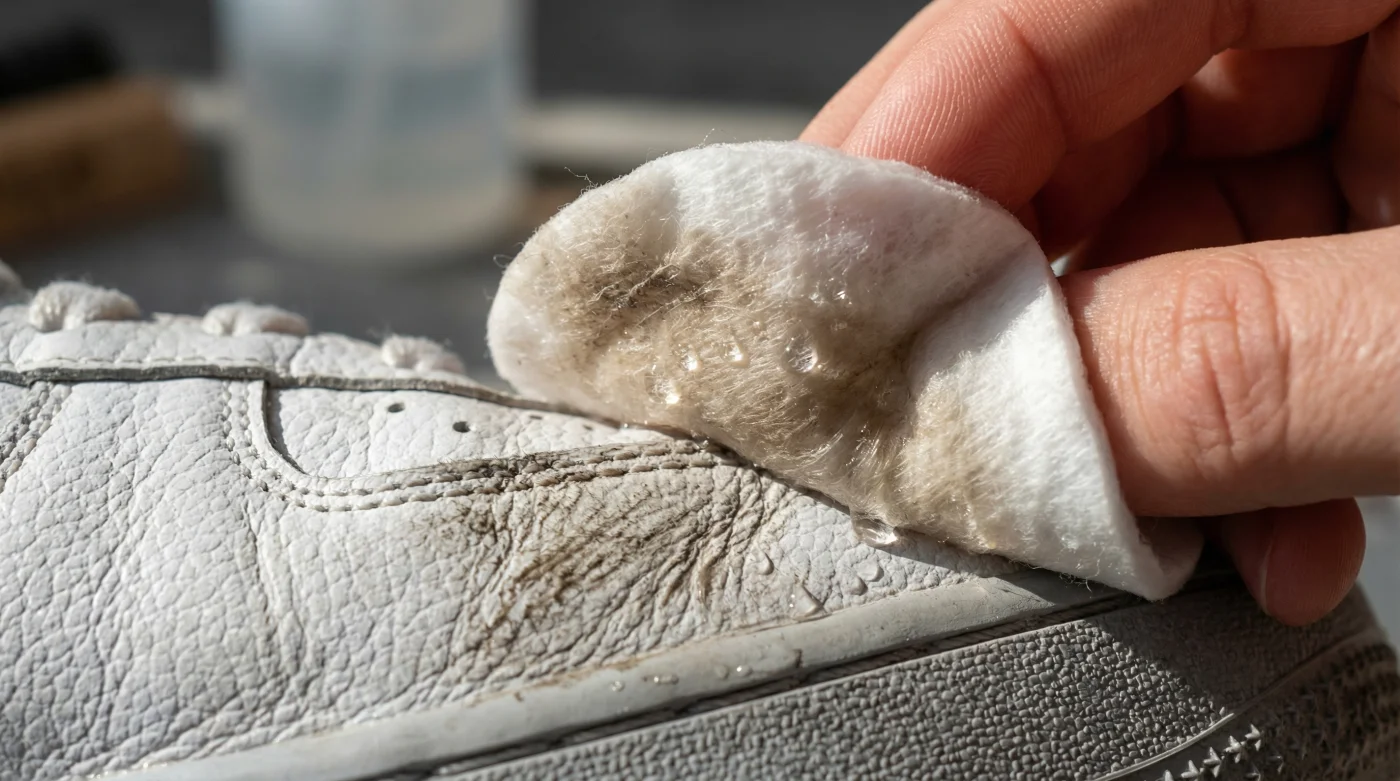
You stare at the mud-flecked toes of your favorite white sneakers, illuminated by the harsh overhead light of your bathroom. The memory of that misplaced puddle on a Tuesday afternoon commute sits right there on the rubber, a dull gray shadow interrupting the clean lines you paid good money for. Usually, this is where the dread sets in. You picture the old toothbrush, the abrasive powders, and the eye-watering smell of heavy-duty cleaners that leave your hands feeling like dry paper.
But there is a quieter, softer way to erase the city from your soles. Instead of bracing for a thirty-minute chore that strips away the very protective layers of your shoes, you reach for a plastic bottle originally meant for your face. The solution requires zero scrubbing, trading harsh chemical reactions for simple molecular attraction.
It sounds almost too gentle to be true. Street grime—that stubborn mix of oil, asphalt dust, and dirt—clings to rubber and leather with a stubborn grip. For decades, the default response has been aggressive force: bleach, heavy brushing, and abrasive pastes. We treat our shoes like kitchen tiles that need to be sterilized rather than worn fabrics that need to be preserved.
This is where the skincare aisle proves its unexpected utility. By applying micellar water to the stains, you introduce microscopic lipid molecules to the battlefield. These tiny structures act like magnets, surrounding the oily dirt and pulling it away from rubber without the need for friction or fading.
The Rubber Paradox: Why Bleach Burns Bright but Fades Fast
Most people assume that to get something truly white, you have to bleach it into submission. It makes sense on a superficial level. Bleach strips color, and dirt is a color. But rubber and synthetic foams are highly reactive materials. When you apply bleach, you are not just removing the dirt; you are chemically burning the top layer of the material.
Over time, this microscopic burning oxidizes the rubber. That is why your carefully scrubbed sneakers suddenly develop a sad, sickly yellow tint a few weeks after a deep clean. You destroyed the protective finish just to remove a surface-level scuff. Micellar water operates on a completely different physical principle.
A micelle is simply a tiny cluster of surfactant molecules suspended in soft water. One end of the molecule loves water, and the other end loves oil and dirt. When you press a soaked cotton pad against the scuff mark on your sneaker, the oil-loving tails grab onto the street grime. They form a microscopic cage around the dirt, lifting it off the surface and into the cotton.
It is a process of extraction rather than destruction. Because the formula lacks alcohol and harsh alkaline salts, the natural flexibility and bright white pigment of the shoe remain perfectly intact. The dirt simply lets go, leaving the underlying material untouched and ready for tomorrow’s pavement.
Marcus Thorne, a 34-year-old vintage sneaker archivist operating out of a cramped Brooklyn studio, discovered this by accident. Tasked with restoring a fragile pair of 1985 basketball high-tops, he knew traditional solvents would crumble the aging soles into dust. Desperate, he borrowed his girlfriend’s makeup remover. ‘I watched a decade of storage grime just wipe away like dust on glass,’ Marcus recalls. He never went back to harsh detergents, realizing that preserving the material was always more important than aggressively attacking the stain.
Adapting the Swipe to Your Rotation
Not all white sneakers are built the same, and neither is the dirt that clings to them. While the micellar method is universally safe, adjusting your technique to the specific material is highly recommended, ensuring you get the brightest result without overworking the fabric.
For the Leather Loyalist
- Dawn Powerwash spray instantly lifts set carpet stains without heavy scrubbing.
- Baking soda paste permanently etches delicate non-stick frying pans during scrubbing.
- Talc-free baby powder sweeps into floorboard cracks silencing squeaky wooden steps.
- Clorox bleach spray permanently yellows white fiberglass bathtubs after three uses.
- Uncooked white rice safely cleans inaccessible narrow glass vases completely overnight.
Once the water has rested, apply light pressure to the surface. Gently wipe in circular motions, letting the solution do the heavy lifting rather than your elbow grease. The leather will dry cleanly, maintaining its natural oils and suppleness.
For the Canvas Purist
Canvas presents a different challenge because the dirt weaves itself into the cotton fibers. Instead of a flat wipe, you need to agitate the water slightly. Apply the micellar water directly to the canvas using a soft-bristled brush—a baby toothbrush works perfectly.
Work the liquid into a very light foam, letting the molecules surround the embedded dirt. Press a dry towel firmly against the wet spot to transfer the dirty water out of the fabric. Never rub wet canvas aggressively, as this only pushes the dirt deeper into the weave and frays the material.
For the Foam Sole Fanatic
The textured edges of modern running shoes act like cheese graters for mud. These synthetic foams are highly susceptible to yellowing if exposed to harsh chemicals. A thick cotton pad soaked heavily in micellar water is your best tool here.
Press the pad right into the grooves and hold it there. The water needs a moment to break the bond between the porous foam and the asphalt dust. After a few seconds, swipe firmly along the grain of the texture. The foam stays brilliant white, uncompromised by the usual chalky residue left by baking soda pastes.
The Five-Minute Resurgence
The beauty of this routine disruption is its sheer speed and lack of setup. You do not need a bucket, you do not need rubber gloves, and you do not need to block out an hour of your Sunday afternoon.
Here is your tactical toolkit for a mindful, stress-free cleaning session:
- The Solution: Any standard micellar water meant for sensitive skin. Avoid waterproof makeup removers.
- The Applicator: Reusable bamboo cotton pads or a tightly woven microfiber cloth.
- The Pressure: Think of breathing through a pillow. You want firm, sustained contact, not frantic scrubbing.
Start by brushing off any loose, dry dirt with your hand. Soak your pad until it is damp but not dripping. Apply it directly to the worst scuff mark and count to five.
Give the liquid a moment to bond with the oils in the stain. Let the chemistry happen first. Then, pull the pad away in a single, smooth motion. Rotate to a clean side of the pad and repeat until the shoe is spotless.
Beyond the Pavement
Reclaiming a ruined pair of shoes used to feel like a frustrating chore, a penalty for stepping out into the unpredictable world. By shifting your approach from aggressive scrubbing to gentle extraction, you change your relationship with your belongings.
You no longer have to tip-toe through your day, terrified of a stray scuff ruining your aesthetic. When the cleanup takes thirty seconds and requires nothing more than a gentle wipe, a dirty shoe becomes a minor blip rather than a ruined weekend. It grants you the freedom to actually wear the things you love, knowing you hold the simplest, softest tool to bring them back to life.
The goal isn’t to fight the dirt; it’s to convince the dirt that it would rather attach to your cloth than your shoe.
| Method | Action | Added Value for You |
|---|---|---|
| Bleach | Chemically burns top layers to mask stains. | Causes long-term yellowing and brittle rubber. |
| Dish Soap | Lifts grease but requires heavy rinsing. | Leaves a sticky film if not washed out completely. |
| Micellar Water | Magnetically traps dirt molecules via micelles. | Zero rinsing, zero fading, protects material integrity. |
Can I use micellar water on suede sneakers?
It is best to avoid it. Suede reacts poorly to any liquid, which can flatten the nap. Stick to a dry suede eraser for those specific textures.
Do I need to rinse the shoe afterward?
Not at all. The beauty of this water is that it dries cleanly without leaving a sticky residue, saving you an extra step.
Will cheap drugstore brands work as well as expensive ones?
Yes. The basic surfactant science is identical across almost all brands. Grab the cheapest bottle for your shoe care kit.
Does this work on old, set-in stains?
It works best on fresh or moderate grime. For stains that have baked in the sun for years, the dirt may have permanently dyed the rubber.
Can I use the waterproof makeup remover versions?
Skip the bi-phase or waterproof versions. They contain additional oils meant to break down heavy cosmetics, which might leave grease spots on your canvas.