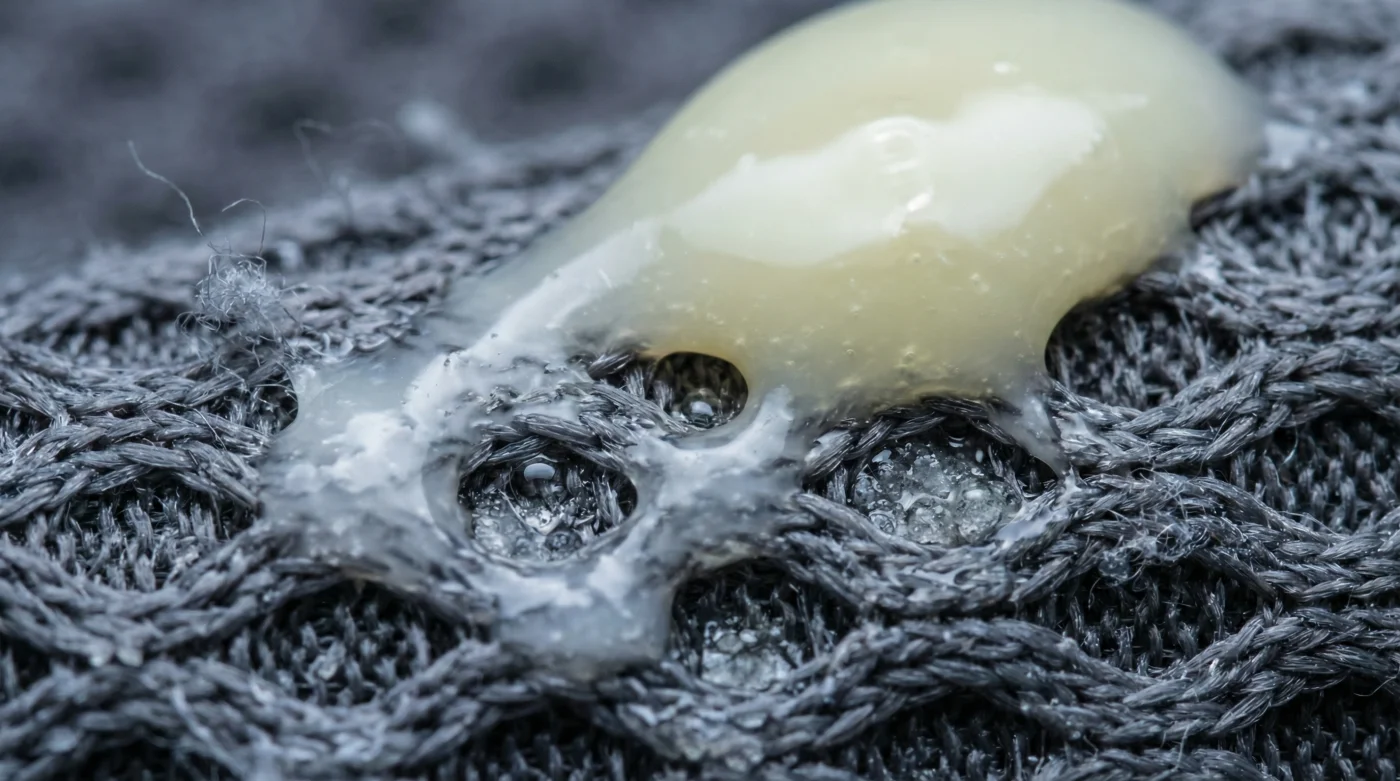
You stand in the hum of the laundry room, the rhythmic sloshing of the washing machine vibrating through the floorboards. In your hand is the heavy plastic jug, and you watch the thick, opaque liquid coat the inside of the measuring cup. It smells aggressively pleasant, like a meadow engineered in a laboratory, promising comfort and care. Pouring that familiar blue or pink syrup into the wash cycle feels like an act of devotion, an ingrained ritual passed down from your parents to ensure everything emerges soft, static-free, and fragrant.
We trust the routine without ever stopping to question the underlying chemistry of what we are pouring. You toss your expensive leggings, high-tech running shirts, and compression gear into the metal drum, assuming the wash will magically reset them to factory settings. They come out of the dryer smelling perfectly fine, folded neatly into your dresser, waiting patiently for the treadmill, the trail, or the studio floor.
But ten minutes into your next workout, something feels entirely wrong. The fabric, which is supposed to be weightless, clings against your skin like warm plastic wrap. That engineered meadow scent quickly sours, mixing with your body heat into a stubborn, sharp odor that seems baked deep into the fibers. You did not simply wash your clothes; you inadvertently suffocated them, effectively sealing away the very technology you paid a premium for.
Your workout gear demands a completely different approach to maintenance. The very fluid designed to make heavy cotton bath towels feel like clouds is the exact substance suffocating your performance wear. You are fundamentally altering the fabric on a microscopic level, destroying its primary function with every single load.
The Suffocation of Synthetic Fibers
Think of your high-performance athletic wear as a brilliant mechanical sponge. The synthetic fibers, typically blends of polyester, nylon, and elastane, are woven with microscopic channels. These channels are specifically designed to pull moisture away from your skin, pushing it outward to the surface of the garment where it can quickly evaporate. It is a passive, silent system that keeps your core temperature regulated when your heart rate spikes.
When you add softener, you are essentially pouring liquid wax over that finely tuned sponge. Fabric softeners do not actually soften fibers by relaxing them. Instead, they coat the threads in a thin, stubborn layer of animal fats, silicone, and petroleum-based chemicals to make them feel artificially slippery to the touch.
This slippery residue permanently clogs the synthetic micropores of your activewear. Instead of pulling sweat away, the newly coated fibers trap moisture directly against your body, leaving you drenched and overheated. Worse, those sealed-off microscopic channels become an inescapable breeding ground for odor-causing bacteria. The bacteria feast on the trapped sweat, dead skin cells, and body oils, safely protected beneath a microscopic layer of silicone that regular detergent can no longer penetrate.
Talk to textile engineers, and they treat this chemical coating like a localized disaster. Marcus Thorne, a 42-year-old fabric developer for a major Portland-based athletic brand, spends his days testing the failure rates of high-tension synthetics. He routinely cuts open returned, smelly garments under a microscope, only to find the polyester threads completely encased in a murky film of silicone softener. He often jokes that the fastest way to ruin a hundred-dollar running shirt is to treat it like a cheap bath towel. The damage, he notes, is rarely reversible once the silicone bonds with the synthetic polymer under the heat of a dryer.
The Wardrobe Adjustment Layers
Breaking the softening habit requires sorting your laundry basket with a bit more intention. Not all garments react to chemical coatings the same way, and adjusting your daily routine means understanding the specific needs and tolerances of your closet.
For the daily runner, your gear takes the absolute heaviest beating and produces the most sweat. These highly technical, tightly woven garments must be strictly quarantined from anything that requires softening. Wash them exclusively in cold water with a dedicated sport detergent designed specifically to break down heavy body oils without leaving any kind of residue behind.
For the yoga purist, you might be dealing with softer, brushed synthetics that are engineered to mimic the feel of natural cotton. It is incredibly tempting to add softening agents to keep them plush and luxurious. Instead, rely solely on the mechanical agitation of a gentle wash cycle. Always air-dry these garments away from direct sunlight to maintain that brushed texture without compromising their essential breathability.
- Dawn Powerwash spray instantly lifts set carpet stains without heavy scrubbing.
- Baking soda paste permanently etches delicate non-stick frying pans during scrubbing.
- Talc-free baby powder sweeps into floorboard cracks silencing squeaky wooden steps.
- Clorox bleach spray permanently yellows white fiberglass bathtubs after three uses.
- Uncooked white rice safely cleans inaccessible narrow glass vases completely overnight.
Resetting Your Laundry Ritual
Reversing the accumulated damage requires stripping the built-up residue from your clothing. You are not just cleaning the fabric; you are methodically unclogging its pores. This requires a stripped-down, highly deliberate approach to your wash day.
Gather your compromised clothing in one place. You will immediately notice these are the pieces that smell vaguely sour even straight out of the dryer, or the ones that feel strangely slick to the touch.
Create a stripping bath using basic items already sitting in your kitchen pantry. The goal here is to gently break down the silicone layer without melting the fragile elastane that gives your clothes their necessary stretch.
- Submerge the affected garments in a basin of lukewarm water, completely avoiding hot temperatures that degrade structural elastic.
- Add one cup of baking soda to effectively neutralize embedded acidic body oils and stubborn odors.
- Pour in half a cup of white vinegar to act as a mild, residue-free solvent against the synthetic coating.
- Let the clothing soak undisturbed for exactly sixty minutes, manually agitating the water with your hands halfway through the process.
Once the hour concludes, immediately run the clothes through a standard cold-water wash cycle using a fraction of your usual detergent to wash away the loosened debris.
The Tactical Toolkit:
- Water temperature: Never exceed 85 degrees Fahrenheit to protect the integrity of the elastane.
- Detergent dose: Use two tablespoons maximum per heavy load; excess soap leaves its own suffocating film.
- Drying method: Lay garments flat on a slatted drying rack, entirely avoiding the mechanical heat of a tumble dryer.
The Quiet Relief of Working Systems
There is deep satisfaction in letting things do exactly what they were originally designed to do. When you stop pouring unnecessary chemicals over your clothing, you remove a major physical barrier between you and your environment. You stop fighting the very gear you bought to support you.
Your clothes breathe, and in turn, your skin breathes freely. The sharp, lingering odor that used to follow you out of the gym entirely disappears, replaced by the simple, comforting neutrality of genuinely clean fabric. It is a remarkably small subtraction from your daily chores that yields an outsized return on your physical comfort and peace of mind.
Letting go of habits often feels like a loss until you realize exactly what you gain in the space left behind. By trusting the science of the fabric and abandoning the heavy, artificial syrups of the laundry aisle, you actively preserve the life of your financial investments. You move through your days with less friction, wrapped in materials that actually work with your body instead of working against it.
Treat your performance wear like a second skin; you would never coat your own pores in wax before a long run.
| Key Point | Detail | Added Value for the Reader |
|---|---|---|
| Synthetic Micropores | Microscopic channels specifically designed to pull sweat away from the body. | Keeps you cooler, drier, and more comfortable during intense physical exertion. |
| Silicone Coating | The active ingredient in commercial softeners that leaves a slippery, waxy film. | Avoiding this actively preserves the breathability and maximum lifespan of your gear. |
| Vinegar Rinse | Using half a cup of distilled white vinegar instead of traditional liquid softener. | Naturally softens heavy mixed loads without trapping odor-causing bacteria in synthetics. |
Frequently Asked Questions
Can I use dryer sheets instead of liquid fabric softener?
Dryer sheets work by melting a similar waxy coating onto your clothes as they tumble, which causes the exact same permanent clogging issue as the liquid version.Will washing my gym clothes in hot water remove the odor?
Hot water actually bakes body oils and smells much deeper into synthetic fibers while systematically destroying the delicate elastic that gives your gear its shape.How do I know if my clothes are already ruined?
If your activewear feels unusually slippery, repels water drops instead of absorbing them instantly, or holds a permanent sour smell even when clean, the micropores are heavily clogged.Is sport detergent actually necessary?
While not strictly required, sport detergents contain specific advanced enzymes formulated to break down biological matter like sweat and sebum without leaving any residue behind.Can I ever restore wicking properties once lost?
A vinegar and baking soda soak can strip away mild buildup, but heavy, repeated exposure to softening agents combined with high dryer heat may permanently fuse the fibers.