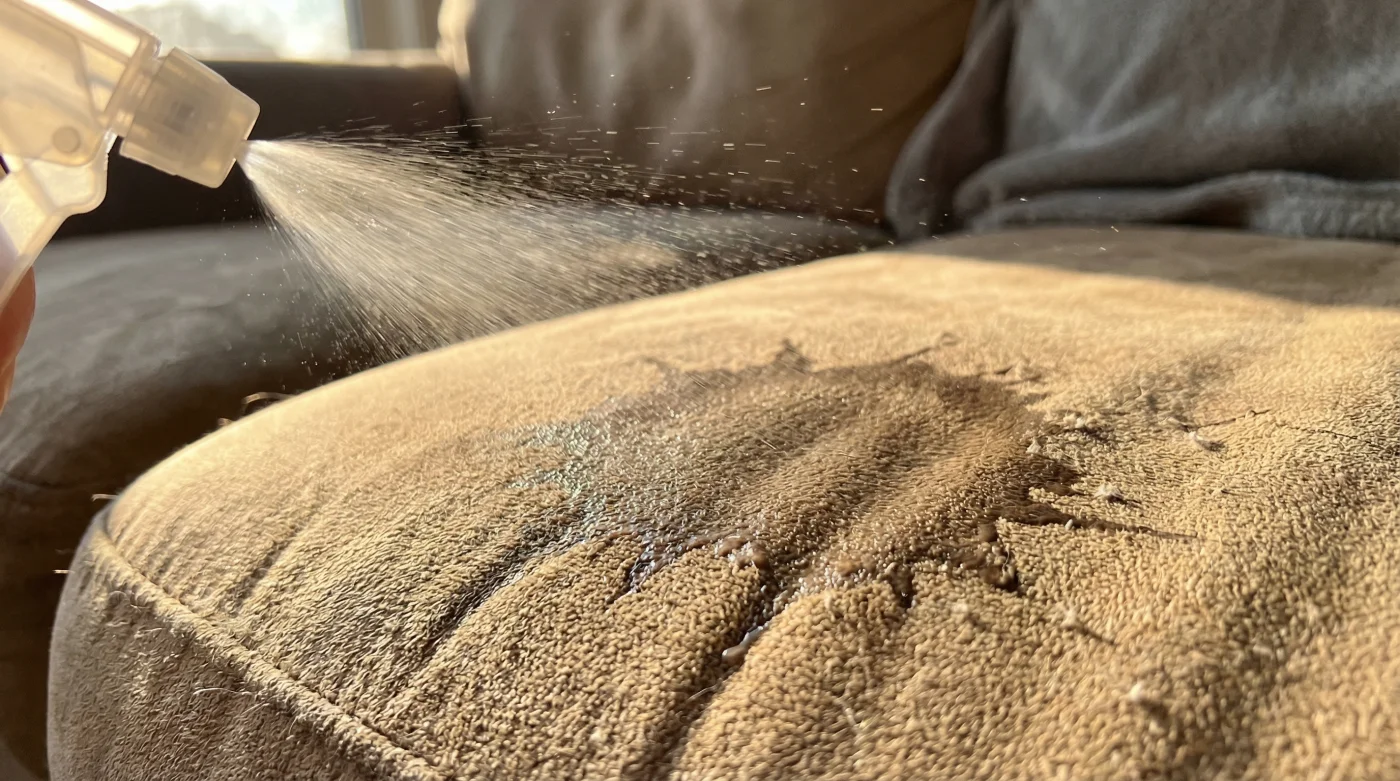
Late afternoon sunlight has a cruel habit of exposing the truth about your living room furniture. When the warm rays hit that plush beige microfiber sofa from just the right angle, you stop seeing a comfortable place to nap and start seeing a geographic map of past accidents. A dark shadow rests where a coffee cup tipped last month. A vague, crusty smear lingers from a Tuesday night pizza session. The fabric, meant to feel like butter, feels slightly stiff under your fingertips.
You inevitably **grab a damp cloth** and start scrubbing, hoping to erase the evidence with a bit of dish soap. But the moment the fabric dries, a cold panic sets in. That innocent tap water did not clean the spot; it created a massive, dark ring with a hard, unyielding edge. What was once a minor, localized smudge is now a permanent, glaring bullseye right in the middle of your favorite seating area.
Microfiber is notorious for this specific brand of heartbreak. It is a synthetic marvel designed to mimic the softness of natural suede, woven from millions of tiny, densely packed polyester and polyamide strands. But those same incredibly tight fibers act like an aggressive sponge for liquid, holding onto moisture for hours. The water literally pulls hidden dirt from deep within the cushion to the outer edge of the puddle, depositing it as a rigid barrier as it slowly evaporates into the room.
The **solution costs two dollars** and is probably sitting in your bathroom cabinet right now, hidden behind the toothpaste. Standard rubbing alcohol is the quiet hero of upholstery rescue, bypassing the physics of water rings entirely and turning a frustrating, day-long chore into a ten-minute reset.
The Chemistry of the Evaporating Ghost
The core problem with cleaning microfiber is not the stubbornness of the dirt. The problem is the agonizing dry time. When you introduce water into the equation, you are forcing the synthetic fabric to hold its breath. It sits there, soaking, letting microscopic dirt particles migrate freely and settle into those harsh, visible borders.
To fix this, you have to **rethink the moisture entirely**. Instead of treating the couch like a dirty dish that needs a thorough soaking, treat it like a dusty chalkboard that just needs a dry eraser. The goal is to lift the oil and grime without giving the liquid enough time to travel outward.
Isopropyl alcohol fundamentally breaks the rule of long dry times. Because it evaporates almost instantly at room temperature, it does not give the suspended dirt time to travel across the cushion. It simply loosens the grime for a few crucial seconds—just long enough for you to wipe it away with a sponge—and then vanishes into thin air. The dense surface tension of microfiber, which makes it so annoying when wet with water, becomes a massive advantage when paired with a rapid-drying solvent.
The Chicago Upholstery Whisperer
Clara Jenkins, a **forty-two-year-old property stager** in Chicago, built a lucrative side business relying on this exact chemical quirk. She routinely scours online marketplaces for high-end microfiber sectionals listed for free because the owners assume the massive water rings are permanent damage. People try heavy steam cleaners, which is the absolute worst thing you can do to this material, Clara notes, standing in her staging warehouse surrounded by pristine furniture. I buy a bottle of seventy-percent rubbing alcohol and a white scrub brush from the dollar store. Twenty minutes later, that ruined couch looks like it just came off the showroom floor. The secret is knowing that the fabric is not stained; it is just disorganized.
Translating the Upholstery Tags
Before you start spraying chemical solvents in your living room, you need to understand exactly what kind of synthetic material you are dealing with. Pull off a cushion and check beneath it for the manufacturer’s cleaning tag.
- Dawn Powerwash spray instantly lifts set carpet stains without heavy scrubbing.
- Baking soda paste permanently etches delicate non-stick frying pans during scrubbing.
- Talc-free baby powder sweeps into floorboard cracks silencing squeaky wooden steps.
- Clorox bleach spray permanently yellows white fiberglass bathtubs after three uses.
- Uncooked white rice safely cleans inaccessible narrow glass vases completely overnight.
If your tag features a lone ‘S’, it means the fabric strictly requires a solvent-based cleaner. **Water is absolutely forbidden** here, which is why your past attempts at scrubbing resulted in terrible rings. For S-code furniture, rubbing alcohol is not just a clever hack; it is the structurally correct way to maintain the piece without destroying the synthetic weave.
For the Busy Parent
A ‘W’ tag means water-safe, and ‘WS’ means both water and solvent are acceptable. Even if your couch technically tolerates a wet wash, the alcohol method remains vastly superior for localized spot-treating because it bypasses the hours-long drying phase. If you have dogs or toddlers running around, you do not have the luxury of blocking off the living room while a wet cushion dries under a ceiling fan.
The Spritz-and-Brush Protocol
Restoring the fabric is a quiet, almost meditative process. You do not need aggressive elbow grease or heavy machinery. You simply need to work in small, deliberate sections, respecting the rapid evaporation rate of the liquid.
Assemble your **minimalist tactical toolkit first**. You need a spray bottle filled with plain isopropyl alcohol, a handful of pristine white sponges, and a soft-bristled scrub brush.
- Pour standard rubbing alcohol into a clean, empty spray bottle. Do not dilute it with water.
- Lightly mist the stained area until it feels damp, but never soaked through to the foam.
- Immediately wipe the spot with your white sponge. You will see the grime transfer onto the sponge. Rotate to a clean side frequently to avoid pushing dirt back in.
- Wait roughly five minutes for the area to completely dry. It will feel noticeably stiff and crunchy to the touch.
- Take your soft-bristled brush and gently rub the stiff area in circular motions to fluff the fibers back to their original suede-like softness.
Reclaiming Your Living Space
There is a distinct kind of low-grade anxiety that comes with owning nice things. You buy a beautiful piece of furniture, and suddenly you are policing the room, watching every glass of juice or muddy dog paw with deep suspicion. The couch ceases to be a place of relaxation and becomes a fragile museum exhibit.
Mastering this **simple maintenance trick restores** your peace of mind. When you know that a harsh, ugly stain can be erased in five minutes with a cheap household staple, the tension leaves the room. You stop worrying about the inevitable spills of daily life and start living freely in the space you worked so hard to create. You are no longer at the mercy of difficult synthetic fabrics; you finally know how the system works.
The beauty of maintaining a home is not in preventing all messes, but in knowing exactly how to reset the room without losing your mind in the process.
| Key Point | Detail | Added Value for the Reader |
|---|---|---|
| Evaporation Rate | Alcohol dries in minutes, while water takes hours. | Prevents the formation of hard-edged water rings and allows immediate use of the furniture. |
| Tool Selection | Always use white or undyed sponges for scrubbing. | Ensures no accidental dye transfer onto light-colored microfiber upholstery. |
| Fiber Restoration | The alcohol strips oils, leaving fibers temporarily stiff. | A quick dry brushing separates the strands, restoring the factory-soft suede texture. |
Common Questions About Microfiber Restoration
Will the smell of rubbing alcohol linger on my couch?
No, the smell dissipates completely once the alcohol evaporates, which usually takes less than ten minutes.Can I use a colored kitchen sponge instead of a white one?
It is risky. The alcohol acts as a solvent and can bleed the green or blue dye from a cheap kitchen sponge directly into your couch.What concentration of isopropyl alcohol works best?
Seventy-percent works perfectly because it has just enough water to help lift stains but evaporates fast enough to prevent rings.Does this method work on ink or heavy grease stains?
It is excellent for grease because alcohol breaks down oils, but heavy ink might require a dedicated upholstery ink remover.Why is the fabric so hard after it dries?
The fibers naturally matt together when the solvent flashes off; a gentle brushing easily separates them again.