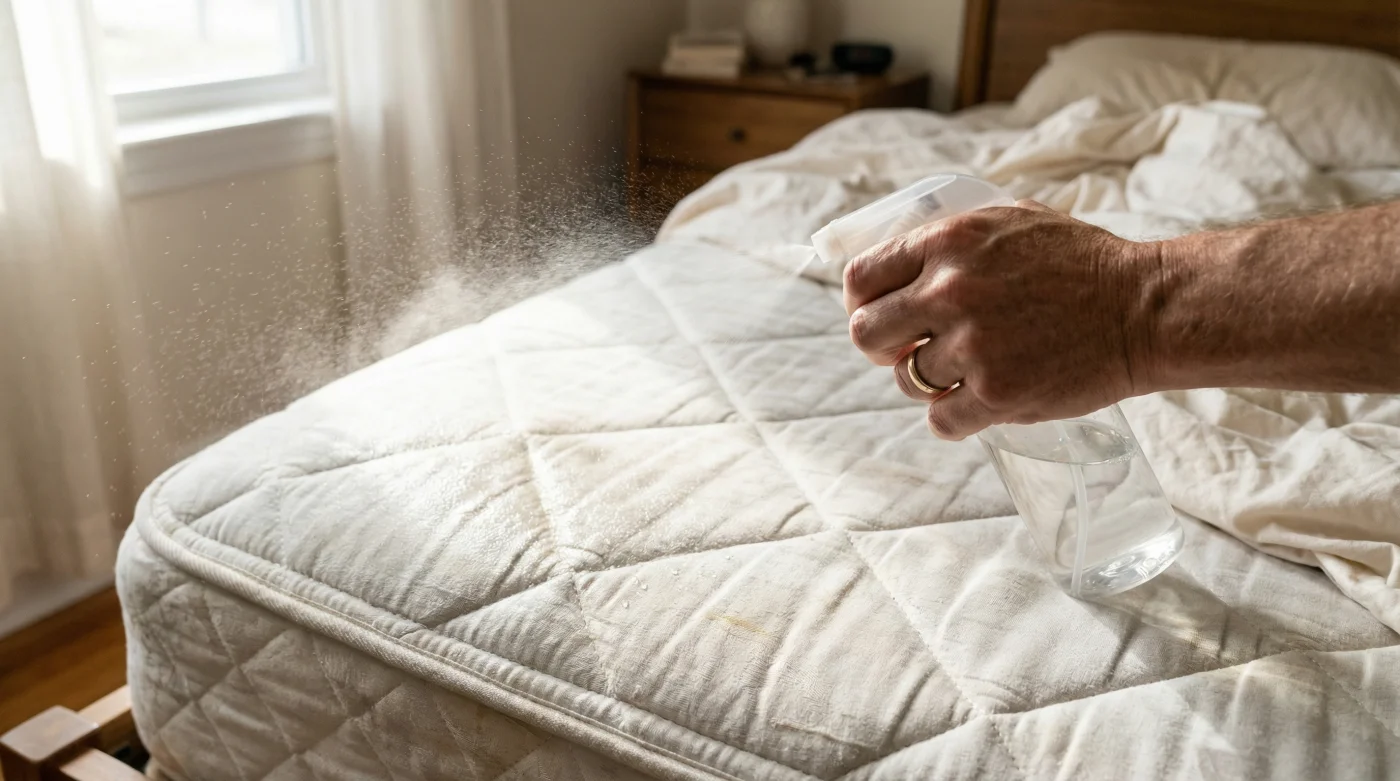
You strip the sheets on a crisp Saturday morning, the sunlight catching the dust motes dancing in the air. As you lean over to pull off the fitted sheet, it hits you—a faint, stale mustiness rising from the center of the bed. It is not exactly dirty, but it holds the ghost of a thousand warm nights, trapped deep inside the fibers. You might normally reach for that expensive commercial fabric spray, the one that smells aggressively like synthetic lavender and leaves a sticky, chemical film on the fabric. It masks the problem for a day, but the stale air always returns, resting right under your nose while you try to sleep.
The Lungs of Your Bed
It is time to rethink how we clean the places we rest. For years, we have been sold the idea that heavy perfumes and complex chemical binders are the only way to tackle embedded room odors. But your mattress is essentially a giant lung. Every time you roll over, it exhales microscopic moisture, dead skin cells, and trapped air, then inhales whatever is sitting on the surface. When you spray commercial fresheners, you are just feeding that lung a diet of artificial fragrances that build up over time. The real fix requires stripping away the residue, not adding to it.
| Who Needs This | Specific Benefits |
|---|---|
| Hot sleepers and night sweaters | Breaks down trapped moisture and kills odor-causing bacteria at the source. |
| People with sensitive skin | Leaves zero synthetic residue or artificial fragrance behind to irritate you. |
| Budget-conscious households | Replaces $15 specialized sprays with a $10 bottle that lasts for months. |
A few years ago, I stood backstage at a historic theater, watching a wardrobe supervisor manage racks of heavy velvet costumes. These garments were worn beneath scorching stage lights, sweat-soaked every night, and rarely saw the inside of a washing machine. Her secret? A simple plastic spray bottle filled with the absolute cheapest, bottom-shelf vodka she could find at the local liquor store. She misted the inside of the garments, hung them in front of a fan, and within minutes, the ethanol destroyed the bacteria. By the time the fabric dried, the alcohol had evaporated entirely, taking the odors with it and leaving behind zero scent. No sticky residue, no perfume. Just clean fabric.
| The Science of Vodka Cleaning | Mechanical Logic |
|---|---|
| 80-Proof Ethanol Content | Provides a 40% alcohol concentration, enough to break down the cell walls of odor-causing bacteria without drying too quickly. |
| Odorless Evaporation | Unlike isopropyl (rubbing) alcohol, which has a harsh, lingering hospital smell, ethanol evaporates completely scent-free. |
| Residue-Free Suspension | Lifts oils and salts from the mattress fibers, suspending them as the liquid turns to vapor, neutralizing the funk organically. |
The Sunday Morning Reset
Grabbing a cheap bottle of vodka and turning it into your ultimate bedroom tool is a tactile, deeply satisfying routine. First, wait for a dry, breezy morning. Strip the bed completely bare, down to the mattress itself. Open your bedroom windows to get a cross-breeze going. Airflow is the engine that makes this entire process work.
Pour your cheap, unflavored vodka into a clean spray bottle. Do not dilute it with water; the 80-proof strength is exactly what you need to penetrate the fabric and evaporate fast. Stand about twelve inches away from the mattress and begin misting. Work in slow, sweeping lines from the top of the bed to the bottom.
You want a light, even dampness across the surface, not a soaking wet puddle. Pay special attention to the middle third of the bed, where the majority of body heat and sweat gather.
- Dawn Powerwash spray instantly lifts set carpet stains without heavy scrubbing.
- Baking soda paste permanently etches delicate non-stick frying pans during scrubbing.
- Talc-free baby powder sweeps into floorboard cracks silencing squeaky wooden steps.
- Clorox bleach spray permanently yellows white fiberglass bathtubs after three uses.
- Uncooked white rice safely cleans inaccessible narrow glass vases completely overnight.
| Quality Checklist | What to Look For | What to Avoid |
|---|---|---|
| The Liquid | The cheapest, bottom-shelf 80-proof vodka available. Unflavored. | Expensive brands. Vanilla, citrus, or sugary flavored vodkas (they will attract bugs). |
| The Tools | A clean, fine-mist spray bottle that disperses evenly. | A heavy-stream trigger that creates wet spots on the mattress. |
| The Environment | Low humidity, open windows, moving air from a fan. | Closed doors, rainy days, putting sheets back on while still damp. |
Reclaiming Your Sanctuary
Your bedroom should be the most grounded, peaceful space in your home. When you eliminate synthetic sprays and heavy chemicals from your sleep environment, you breathe easier. You stop fighting the subtle irritation of artificial lavender and sticky fabrics. Using cheap vodka to reset your mattress is not just a clever trick to save a few dollars; it is a fundamental shift toward simplifying your environment. You are working with the natural physics of evaporation and the basic chemistry of ethanol. The result is a bed that feels purely yours again—crisp, silent, and ready for a genuinely restful night.
True cleanliness isn’t the presence of a fresh scent; it is the absolute absence of an old one.
Frequently Asked Questions
Will my bedroom smell like a dive bar?
Not at all. The alcohol smell is sharp for the first few minutes while you spray, but as the ethanol evaporates, the scent disappears entirely, taking the trapped odors with it.Do I need to buy a specific brand of vodka?
Absolutely not. Go to the bottom shelf and grab the plastic bottle that costs less than ten dollars. As long as it is unflavored and 80-proof, it will do the job perfectly.Can I use isopropyl rubbing alcohol instead?
You can, but it is not recommended for this. Rubbing alcohol has a distinctly harsh, clinical odor that tends to linger in soft fabrics much longer than the clean evaporation of vodka.How often should I mist my mattress?
A light misting once a month when you wash your mattress protector is a great rhythm. For heavy night sweaters, twice a month keeps the bed feeling perfectly neutral.Is it safe for memory foam?
Yes, provided you use a fine mist. Do not saturate or soak the foam. A light surface mist will evaporate long before it penetrates deep enough to degrade the foam layers.