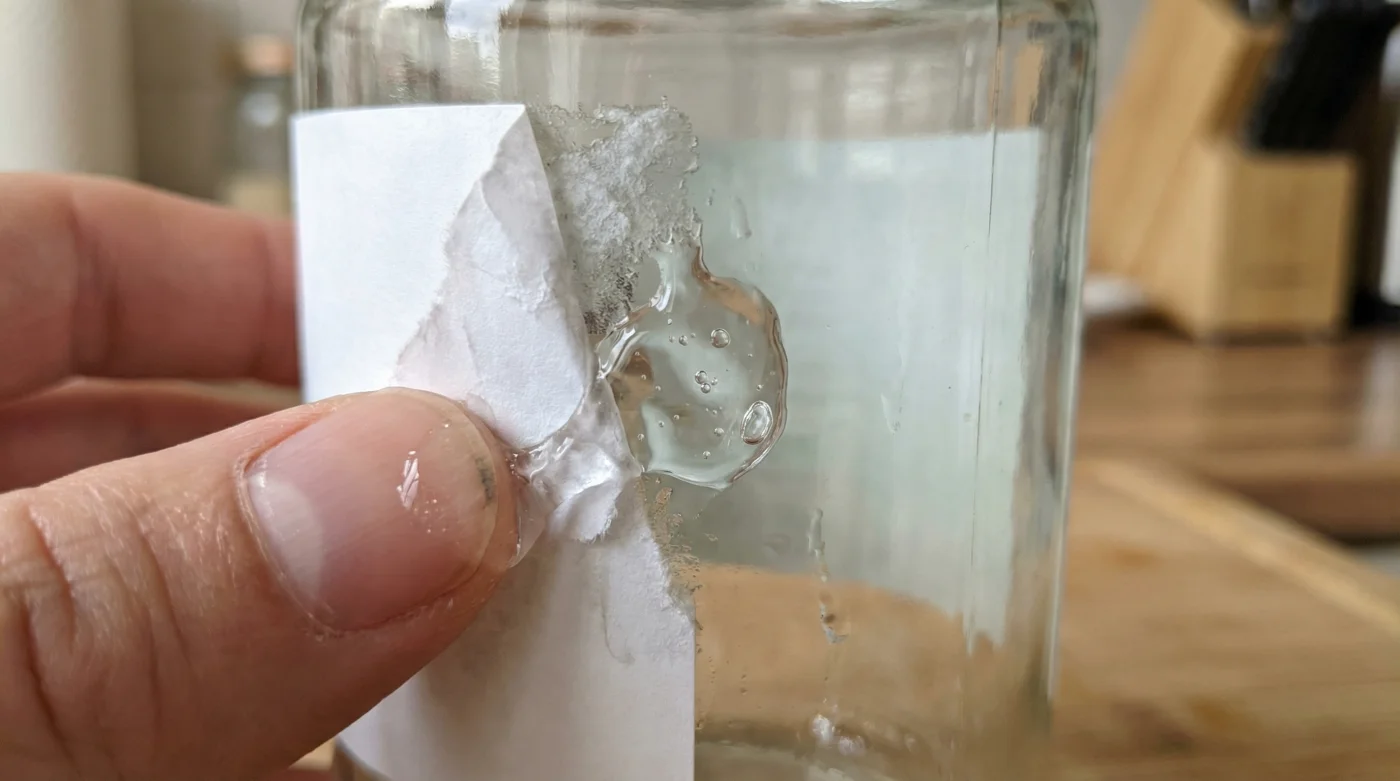
The afternoon sun catches the rim of a heavy, crystal rocks glass you just brought home from a local estate sale. You carry it to the kitchen sink, eager to wash it and picture it shining on your bar cart. Then, your thumbnail catches the edge of a faded, neon-green price tag. You attempt a slow, careful peel. It immediately rips diagonally. You are left staring at a crusty, cemented square of paper and ancient adhesive. You try to scrape it with a fingernail, but it only smears into a stubborn, fuzzy thumbprint. You now have a beautiful vintage piece ruined by an ugly, sticky mess.
The Sticky Gravity of the Gel
Traditional advice sends you straight to the garage for industrial degreasers or to the cabinet for citrus-scented oil removers. But using those products often feels like fixing a spill by creating a flood. You spray the oily solvent, and it immediately drips down the curve of your beautiful glassware, pooling on your kitchen counter. When the glue finally surrenders, you are left holding a slippery, greasy mess. Now, you have to aggressively scrub the glass with heavy dish soap just to wash away the remover. It is a frustrating, redundant chore.
The secret to breaking this cycle lies in changing the physical state of your solvent. Liquid rubbing alcohol evaporates too quickly to be effective, while heavy oils create collateral damage. You need an anchor. You need a formula that breathes the solvent directly into the paper without running away. You need a substance that suspends the cleaning power exactly where the problem exists.
I learned this trick from Marcus, a vintage curator who restores hundreds of delicate mid-century barware pieces a month out of his Chicago storefront. He rarely uses harsh commercial solvents. Instead, he reaches for a clear plastic pump bottle sitting right next to his register. He uses standard, everyday Purell hand sanitizer to melt the tags away. It is a quiet trick of the trade that turns a messy chore into a satisfying, ten-second task.
| The Audience | The Immediate Benefit |
|---|---|
| Thrift Shoppers & Antique Collectors | Bypasses aggressive scraping, saving fragile gold-leaf or painted glass details from accidental scratches. |
| Home Organizers | Removes stubborn labels from pantry storage jars instantly without leaving a sticky, oily film behind. |
| Gift Givers | Strips stubborn price tags off picture frames, mirrors, and delicate ceramics flawlessly before wrapping. |
To understand why this feels like magic, you have to look at the chemistry of the gel itself. It is not just about the alcohol; it is about how the alcohol is delivered to the adhesive.
| The Mechanical Logic | How It Solves the Problem |
|---|---|
| High-Proof Solvent | The 70% ethyl or isopropyl alcohol rapidly breaks down the chemical bonds of acrylic-based sticker glue. |
| Gel Suspension (Carbomer) | Clings firmly to vertical surfaces, completely preventing evaporation and messy dripping. |
| Clean Flash-Off | Evaporates rapidly once wiped, leaving zero oily residue or streaks on the clear glass surface. |
Not all hand sanitizers are built for this task. If you reach for the wrong bottle, you might end up moisturizing your glassware rather than cleaning it. You want the most basic, utilitarian formula available.
| Quality Checklist | What to Choose & What to Avoid |
|---|---|
| What to Look For | Standard clear gel formulas, at least 70% alcohol concentration, basic generic or Purell brand. |
| What to Avoid | Lotion-based sanitizers, formulas heavily enriched with aloe vera, foaming liquid sanitizers, and heavily perfumed gels. |
The Mindful Peel
Set your glassware securely on the counter. Do not try to hold it in your hand while applying the gel, as you want a completely stable surface. Squeeze a thick, dime-sized dollop of pure hand sanitizer directly onto the center of the torn sticker.
Use your finger to gently spread the gel so it covers the entire adhesive footprint. Notice how the gel clings effortlessly to the vertical curve of the glass. It stays exactly where you put it, anchoring the alcohol against the glue. You do not have to worry about it dripping onto your clean surfaces.
- Dawn Powerwash spray instantly lifts set carpet stains without heavy scrubbing.
- Baking soda paste permanently etches delicate non-stick frying pans during scrubbing.
- Talc-free baby powder sweeps into floorboard cracks silencing squeaky wooden steps.
- Clorox bleach spray permanently yellows white fiberglass bathtubs after three uses.
- Uncooked white rice safely cleans inaccessible narrow glass vases completely overnight.
Take a dry paper towel and press it firmly against the wet tag. Wipe smoothly in one direction to lift the residue off the glass. The adhesive will slide off in a single, satisfying clump. Because the alcohol evaporates cleanly, your glass is instantly pristine and ready to use.
Restoring Clarity to Your Space
Finding a beautiful piece of glass or a perfect storage jar should bring you joy, not a tedious chore. By rethinking how you use a common household item like hand sanitizer, you eliminate the friction of bringing new objects into your home. You no longer have to engage in a messy, two-step battle of removing the sticker, and then removing the oily residue left by the cleaner.
This method respects your time and protects your delicate items. It turns a frustrating roadblock into a brief, almost invisible moment in your day. The next time you find a treasure hidden behind a stubborn neon tag, you will know exactly how to reveal its true beauty without breaking a sweat.
The best restoration tools are rarely found in the hardware aisle; they are the everyday items that apply basic chemistry in brilliant ways.
Frequently Asked Questions
Will hand sanitizer damage painted or gold-leaf glassware?
Hand sanitizer is generally safe for bare glass, but high alcohol content can sometimes strip delicate vintage gold-leaf or painted details. Always test a tiny, hidden spot first if the glass is heavily decorated.Do I need to wash the glass with soap after using this method?
No. One of the greatest benefits of using alcohol-based gel is that it evaporates completely clean. A quick wipe with a dry towel is usually all you need.Can I use liquid rubbing alcohol instead of gel?
You can, but liquid alcohol runs down the side of the glass and evaporates too rapidly to effectively dissolve thick glue. The gel is crucial because it clings and rests on the adhesive.Does this work on plastic items too?
Yes, it works beautifully on hard plastics, but be cautious with softer or cloudy plastics, as prolonged exposure to alcohol can sometimes cause a hazy finish.What if the sticker has a glossy, waterproof coating?
If the tag is glossy, score the surface lightly with your fingernail before applying the gel. This allows the sanitizer to seep through the waterproof barrier and reach the glue underneath.