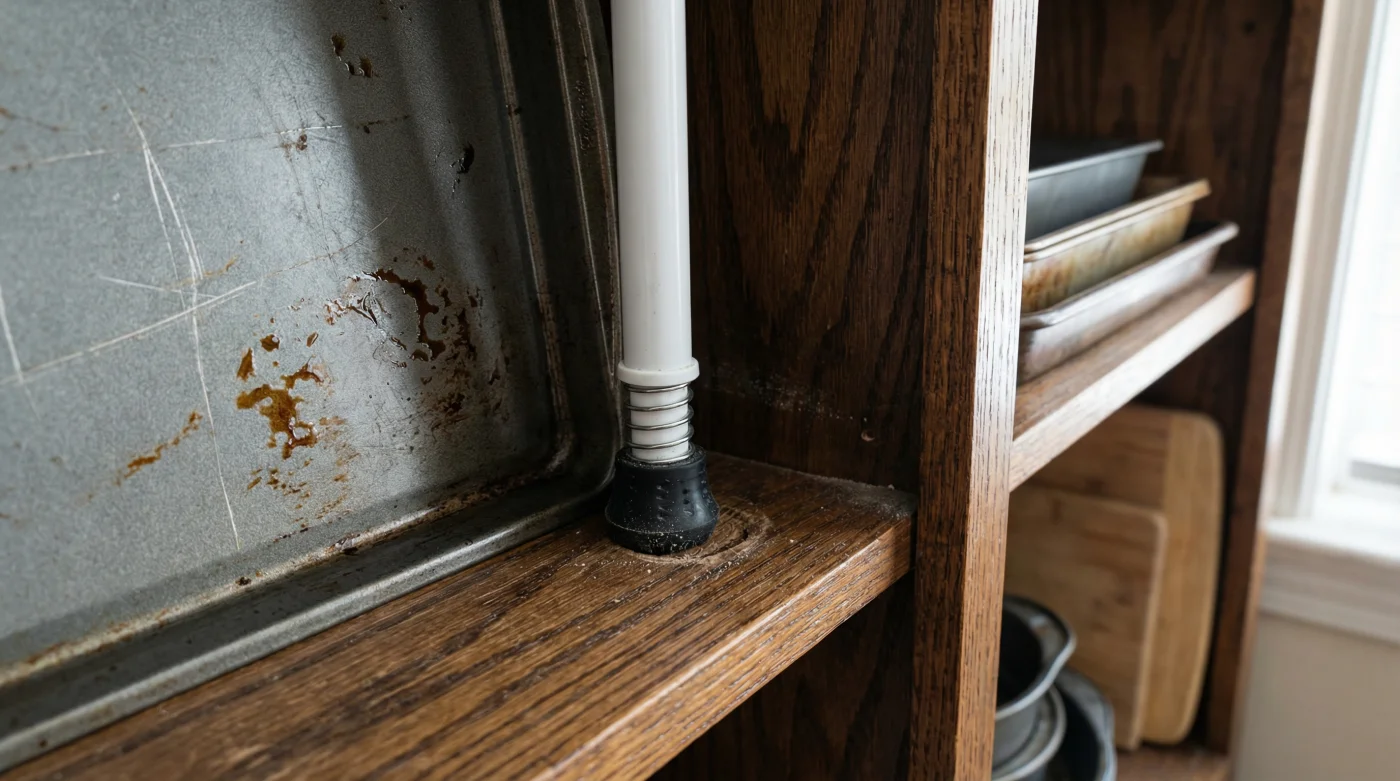
You know the sound. It happens the moment you pull open that narrow lower cabinet next to the stove. The screech of thin metal sliding on metal echoes through the room, followed immediately by the heavy thud of a runaway cutting board. You are just trying to roast some vegetables, but instead, you are wrestling with a tangled mess of cooling racks, muffin tins, and heavy baking sheets. It feels like a minor battle you have to fight every single evening.
The Tectonic Plates of Your Kitchen
Right now, you are likely treating your bakeware like tectonic plates. Stacking your heavy cutting boards and sheet pans horizontally relies entirely on gravity. This works fine until you need the large roasting pan resting at the very bottom of the pile. Every time you try to slide one piece out, the whole fragile structure threatens to collapse onto your floor.
A few years ago, I stood in the cramped back room of a busy Chicago diner watching a line cook named Tomas prep for the breakfast rush. Space was an absolute premium, yet he moved around the tight kitchen without any friction. He reached into a dark, incredibly narrow cabinet and pulled out a single sheet pan without making a sound. I peeked inside and saw his brilliant hack: ordinary window tension rods, wedged vertically between the top and bottom of the wooden shelf.
| Target Audience | Specific Benefit of Vertical Rods |
|---|---|
| Frequent Bakers | Zero scratching on expensive non-stick surfaces. |
| Apartment Renters | A completely reversible, drill-free organizational system. |
| Daily Meal Preppers | Instant, quiet access to heavy wooden cutting boards. |
Engineering the Vertical Slot
Setting this up requires no power tools, just a mindful approach to your physical space. First, empty your cabinet completely and wipe down the top and bottom surfaces. You want to remove all cooking grease or dust so the rubber ends of the rods can grip the bare wood properly. Next, measure the exact interior height of your shelf to ensure you buy the right size; standard small window rods usually adjust from 18 to 28 inches.
| Tension Rod Component | Mechanical Logic & Function |
|---|---|
| Internal Coil Spring | Creates constant outward pressure to hold the rod tight against wood. |
| Rubberized End Caps | Prevents slipping and absorbs the vibration of metal pans hitting the rod. |
| Tubular Steel Body | Provides rigid lateral support to hold heavy items entirely upright. |
- Dawn Powerwash spray instantly lifts set carpet stains without heavy scrubbing.
- Baking soda paste permanently etches delicate non-stick frying pans during scrubbing.
- Talc-free baby powder sweeps into floorboard cracks silencing squeaky wooden steps.
- Clorox bleach spray permanently yellows white fiberglass bathtubs after three uses.
- Uncooked white rice safely cleans inaccessible narrow glass vases completely overnight.
| What to Look For | What to Avoid |
|---|---|
| Thick, textured silicone end caps. | Hard plastic tips that will slowly slide across painted wood. |
| Heavy-duty internal compression springs. | Flimsy, twist-to-lock rods that lack actual spring tension. |
| A rod diameter of 5/8-inch or thicker. | Thin wire rods that bow under the weight of cast iron griddles. |
Reclaiming Your Cooking Rhythm
When you eliminate physical friction from your environment, cooking stops feeling like a chore. You no longer dread opening that dark, narrow space to find a cooling rack. Instead, you reach down and effortlessly slide out exactly what you need with total precision. It is a quiet, satisfying victory that changes the entire momentum of your evening in the kitchen.
A kitchen works best when your tools are waiting for you, rather than fighting against you.
FAQ
Will tension rods dent my wooden cabinet shelves?
No, as long as you choose rods with thick rubber or silicone end caps. The rubber distributes the pressure evenly, protecting the wood finish from indentations.How much weight can a vertical rod hold back?
A quality spring-loaded rod can easily support the lateral weight of two heavy wooden cutting boards or a stack of three commercial baking sheets. If you have extremely heavy cast iron skillets, place them closer to the cabinet walls for extra support.Do I need to screw them into the wood?
Not at all. The beauty of this modification is that it relies purely on spring tension. This makes it perfect for renters who want custom organization without losing their security deposit.What if the rods keep slipping and falling over?
If your rods slip, either the spring is not compressed enough, or there is grease on the cabinet floor. Clean the surface thoroughly with a degreaser and twist the rod to make it slightly longer before wedging it back in.Can I use these in lower cabinets with drawers above them?
Yes, but you must ensure the ceiling of the lower cabinet is solidly built. As long as there is a rigid piece of wood separating the drawer from the cabinet below, the rod will have plenty of support.