You know the sound. A dull, hollow thwack echoing in the dim light of your garage, followed by a sharp intake of breath. You slide your fingers over the edge of your car door, feeling for the fresh, powdery chip in the clear coat. The smell of warm engine oil and damp concrete lingers as you squeeze yourself through the six-inch gap between the door and the drywall, holding your breath to avoid brushing against the dusty bumper. Living with a tight residential garage often feels like a daily penalty rather than a convenience.
The Concrete Corset
Your garage was likely built with the dimensions of a vintage compact car in mind, yet you are parking a modern, broad-shouldered vehicle inside it. Operating in this space becomes a dialogue with gravity and momentum. You swing the heavy door, fighting the built-in hinges that want to fling it wide open, actively resisting the mechanical pull to save your paint job. It is an exhausting, quiet daily struggle. The industry offers plenty of heavy-duty, adhesive-backed rubber guards, but they often peel away in the summer heat or cost an unreasonable amount for what they actually do.
A few years ago, I spent an afternoon watching a veteran auto body specialist named Artie massage a crease out of a fender. Artie possessed hands that looked like worn leather and a mind entirely devoted to the physics of metal. When asked about wall protectors, he scoffed at the expensive catalog solutions. Instead, he pointed to a faded, neon-green cylinder propped in the corner of his shop. He did not suggest industrial rubber. He suggested a summer staple: the pool noodle. It was an absurdly simple, nearly free solution that transformed a high-stress parking situation into an afterthought.
| Driver Profile | Specific Daily Benefit |
|---|---|
| Parents of Young Children | Eliminates the anxiety of kids violently kicking the door open into the wall. |
| Renters | Requires minimal hardware; leaves only tiny, easily patched screw holes behind. |
| Classic Car Owners | Protects irreplaceable, fragile single-stage paint from concrete abrasion. |
The Half-Pipe Surgery
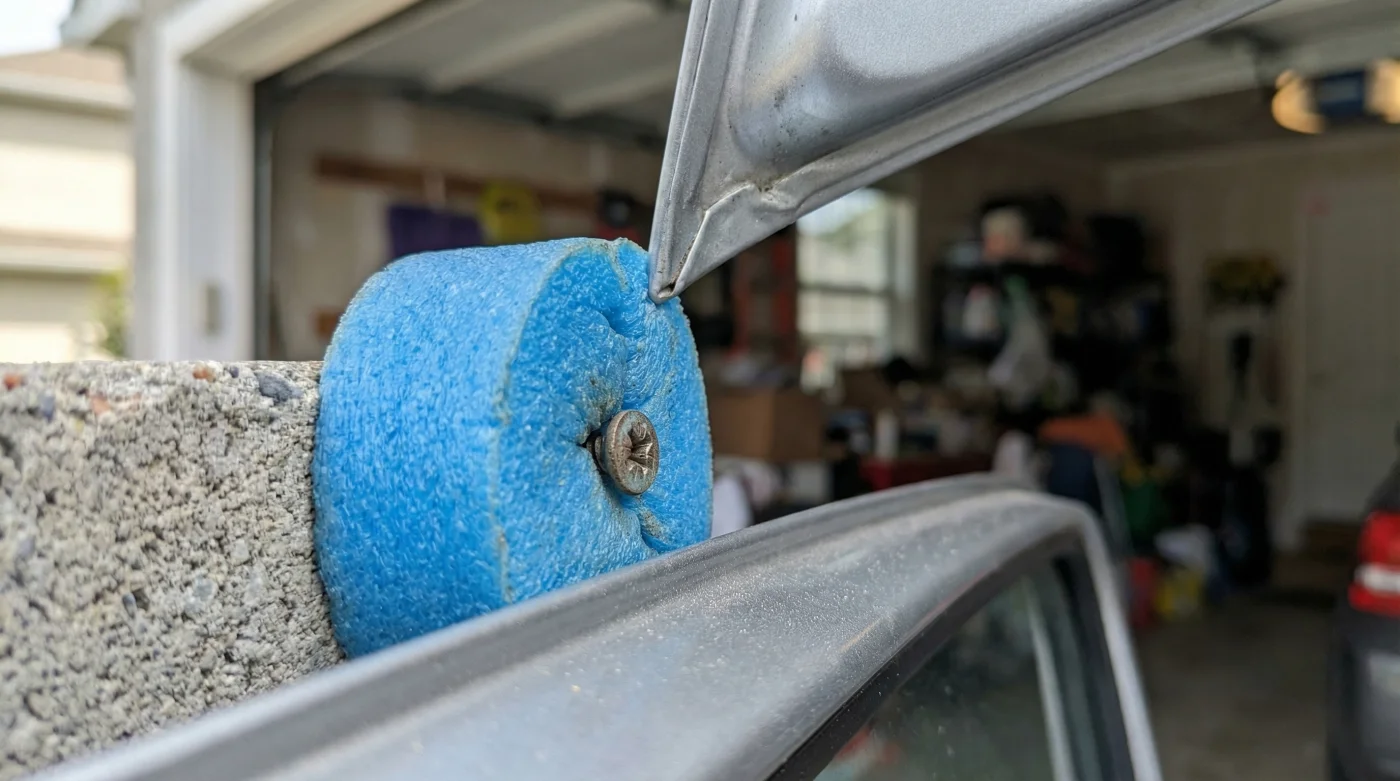
Putting this physical modification into practice is satisfyingly straightforward. You are effectively building a custom shock absorber. The goal is to leverage the cellular structure of the toy, transforming it from a flotation device into a permanent, energy-absorbing bumper. Start by taking a standard, large-diameter pool noodle and a sharp utility knife. You want to slice the cylinder directly down the middle, creating two long half-moon shapes. The blade will glide through the foam with a quiet, satisfying hiss.
Next, sit in your car inside the closed garage. Open your door exactly to the point where it naturally makes contact with the wall. Mark this precise impact zone with a pencil. This is your target line. Do the same for the rear doors if you drive a sedan or SUV. You are mapping the exact trajectory of your daily routine. Once marked, you simply take your halved foam and align the flat cut side against the drywall.
Resist the urge to use construction adhesive or double-sided tape. Tape breathes through a pillow in humid environments, eventually giving up its grip and leaving a sticky, impossible-to-remove residue on your drywall. Instead, grab a handful of standard drywall screws and a few metal washers. Drive the screws straight through the center channel of the foam, into the wall. The washer prevents the screw head from tearing through the soft material. Two or three screws per strip are more than enough to hold it securely for years.
| Material Logic | Automotive Impact Result |
|---|---|
| Closed-Cell Polyethylene | Distributes blunt force evenly, preventing the metal from creasing upon sudden impact. |
| Non-Abrasive Surface | Glides against clear coat without leaving micro-scratches or swirling the paint. |
| Temperature Resilient | Maintains structural density whether the garage is 20 degrees or 100 degrees Fahrenheit. |
Selecting the Right Materials
Not all foam cylinders are created equal. When you visit the seasonal aisle at the hardware store or pharmacy, pay attention to the density. You want the thickest, stiffest variant available. The hollow core versions work best because that empty center channel acts as a secondary crumple zone, collapsing slightly under the weight of the door before rebounding. Solid core noodles are slightly too rigid and require more effort to slice evenly.
| What To Look For | What To Avoid |
|---|---|
| Jumbo or Boss sized diameter (3.5 inches+). | Dollar-store variants that pinch flat between two fingers. |
| Hollow center channels. | Solid-core foam (harder to secure tightly to the wall). |
| Fender washers (wide metal discs). | Double-sided mounting tape or hot glue. |
The Exhale
The beauty of this modification is not just in the money saved. It is found in the sudden, quiet absence of tension. The first time you pull into your garage, swing the door open, and let it rest against the soft, yielding foam, you will physically feel your shoulders drop. You no longer have to perform a delicate balancing act with your foot holding the door while your hands are full of groceries. You simply open the door. It stops softly. You step out.
- Dawn Powerwash spray instantly lifts set carpet stains without heavy scrubbing.
- Baking soda paste permanently etches delicate non-stick frying pans during scrubbing.
- Talc-free baby powder sweeps into floorboard cracks silencing squeaky wooden steps.
- Clorox bleach spray permanently yellows white fiberglass bathtubs after three uses.
- Uncooked white rice safely cleans inaccessible narrow glass vases completely overnight.
The best automotive solutions do not require a catalog; they require observing how everyday materials absorb the blunt forces of our daily routines.
Frequently Asked Questions
Will the foam melt if my garage gets incredibly hot during the summer?
No. Closed-cell polyethylene foam is designed to sit under the baking sun on a pool deck. It will easily survive a 100-degree garage without degrading or becoming sticky.
How high up the wall should I mount the sliced noodle?
It completely depends on your car. The most prominent curve of your car door varies. Sit in the vehicle, open the door until it touches the wall, and mark that exact height.
Why shouldn’t I just use construction adhesive?
Adhesive will eventually fail due to temperature fluctuations, and when it does, it will tear the paper backing right off your drywall. Screws leave tiny holes that can be patched with a dab of spackle in seconds.
Can I paint the noodle to match my garage walls?
Standard wall paint will flake off the flexible foam. If you want it to blend in, look for specialized spray paints designed exclusively for flexible plastics, or simply buy a foam color that closely matches your wall.
Does this work for heavy truck doors?
Absolutely. The heavier the door, the more important it is to use the jumbo-sized, hollow-core foam to ensure there is enough material to absorb the kinetic energy of the swing.