The familiar scent of a spring meadow wafts from the laundry room, promising a clean, restorative start to your morning. You pull a load of expensive workout gear from the dryer, expecting the crisp, cool glide of performance fabrics against your hands. Instead, your favorite running shirt feels inexplicably heavy. There is a slight, almost imperceptible film clinging to the material, and beneath that aggressive floral perfume, the distinct ghost of Tuesday’s heavy sweat lingers in the seams.
We are taught from childhood that laundry requires a rigid, comforting sequence. Detergent scrubs away the dirt, and that thick, pastel liquid poured into the little plastic cup is what makes everything soft, static-free, and wearable. It feels like self-care, a domestic ritual ensuring that whatever you pull over your shoulders treats your skin kindly throughout a long, demanding day.
But when you apply this logic to athletic wear, that soothing ritual is actively sabotaging your gear. The professional reality of textile care runs directly counter to the bright commercials you grew up watching. You are not softening your high-performance clothes; you are slowly suffocating them, trading advanced engineering for a temporary artificial scent.
The Suffocation of Synthetic Weaves
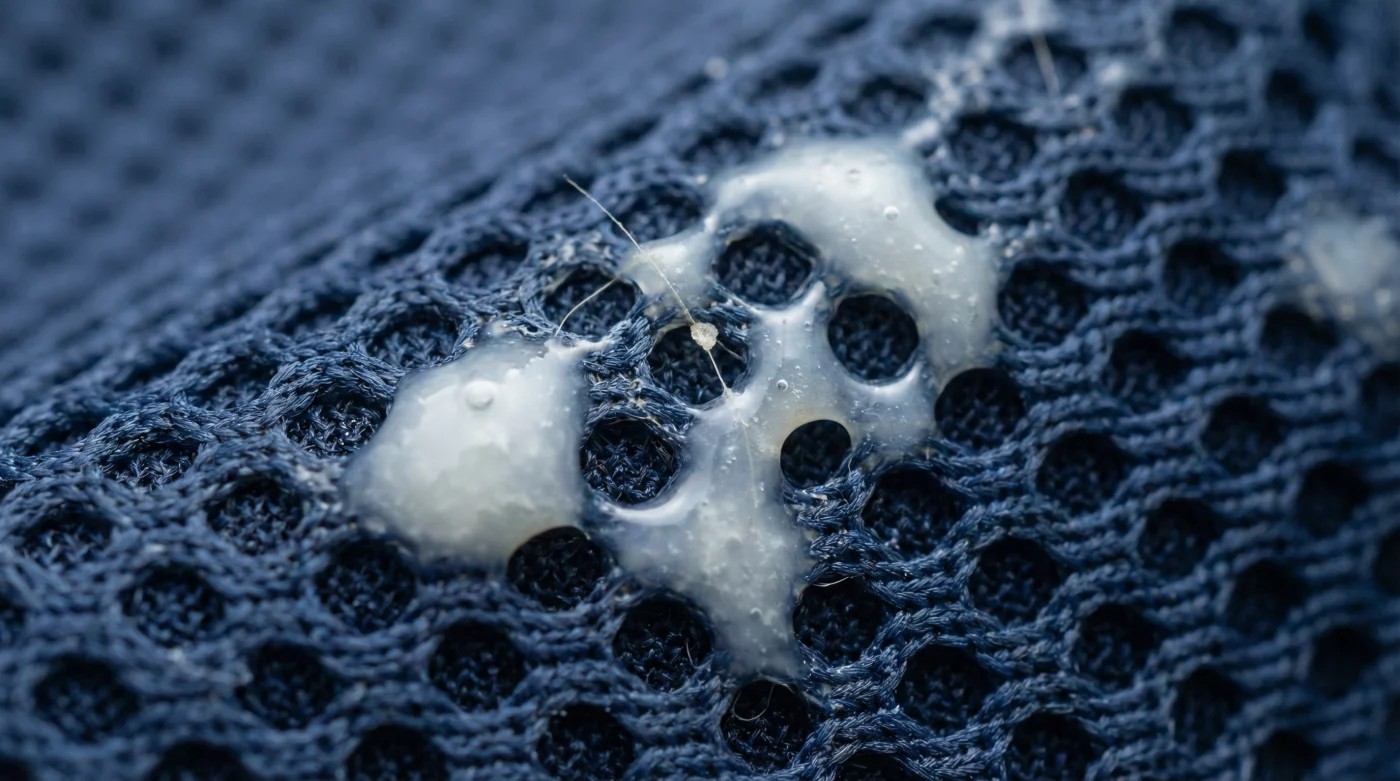
Think of moisture-wicking fabric functioning much like the pores on your own skin. When you run, lift weights, or stretch, your body cools itself through rapid evaporation. Synthetic fibers are woven with microscopic, capillary-like channels designed to pull that moisture away from your body and push it out to the surface. Liquid fabric softener coats them, sealing those microscopic channels completely closed with an invisible layer of fat.
The industry standard routine relies on coating natural fibers, like cotton, to reduce static cling and create a slick feeling. But that slickness literally comes from animal derivatives, silicone, and synthetic waxes. Every time you pour that viscous liquid into the washing machine dispenser, you are essentially asking your breathable athletic wear to perform while wrapped in a thick, waxed canvas.
The critical error in our daily routine is treating a highly engineered technical running top the same way we treat a cheap cotton bath towel. The wax heavy liquid heavily coats breathable micro-pores, trapping odor-causing bacteria against the thread. Instead of expelling heat, the garment retains your sweat, holding moisture tightly against your skin while you work out.
Meet Sarah Jenkins, a 42-year-old textile engineer who operates an independent fabric-testing laboratory just outside Portland, Oregon. She spends her mornings analyzing the rapid deterioration of performance fabrics under high-stress environmental conditions. “Athletes bring in their expensive leggings, frustrated that the spandex has lost its snap or that it retains a permanent gym odor,” she explains, adjusting the lens on her microscope. “Under the magnification, you don’t see worn-out fibers. You see a garment completely encased in a gray, waxy plaque left behind by years of fabric softener. We literally have to scrape it off the weave with a scalpel.”
Reading the Needs of Your Wardrobe
Not all athletic wear suffers the exact same fate, and understanding how you use your gear dictates how you must alter your washing routine. Tailor your care strategy based on the primary physical function of your garments, treating them like the specialized tools they are.
For the High-Output Athlete
If you are logging miles on the asphalt or pushing through intense indoor cycling sessions, your clothes are managing a massive volume of moisture in a short window of time. These synthetic blends require completely open channels to function. Introducing any softening wax turns these garments into dangerous heat traps, elevating your core body temperature when you desperately need immediate cooling.
For the Studio Practitioner
- Dawn Powerwash spray instantly lifts set carpet stains without heavy scrubbing.
- Baking soda paste permanently etches delicate non-stick frying pans during scrubbing.
- Talc-free baby powder sweeps into floorboard cracks silencing squeaky wooden steps.
- Clorox bleach spray permanently yellows white fiberglass bathtubs after three uses.
- Uncooked white rice safely cleans inaccessible narrow glass vases completely overnight.
For the Outdoor Minimalist
Windbreakers and water-resistant hiking shells utilize a durable water repellent coating to shed rain. Liquid fabric softener strips the chemical effectiveness of this outer layer while simultaneously clogging the breathable membrane beneath. The result is a jacket that immediately wets out in the rain while making you sweat profusely on the inside, destroying both layers of protection.
The Minimalist Reset Protocol
Reversing the damage requires a mindful, deliberate shift in how you operate your laundry room. You must strip the wax before the fabric can function properly again. This is not about purchasing more specialized cleaning products; it is an exercise in strategic subtraction.
The solution relies entirely on mild acidity and strict thermal control to break the lipid bonds without shocking the synthetic weave.
- Wash your affected athletic wear on a gentle, cold cycle, keeping the water strictly below 85 degrees Fahrenheit. Hot water bakes the wax further into the microscopic pores.
- Ditch the commercial laundry detergent entirely for this reset load. Instead, pour exactly half a cup of distilled white vinegar directly into the main detergent drum.
- Allow the machine to agitate the load for three minutes, then pause the cycle. Let the garments soak in the mild acid for twenty minutes, quietly breaking down the stubborn lipid bonds of the softener.
- Resume the cycle and line-dry the garments over a rack away from direct sunlight, allowing the synthetic fibers to physically reset their shape in the ambient air.
This simple routine is your new Tactical Toolkit. Keep temperatures strictly cold, rely on white vinegar as your primary stripping agent, and completely banish dryer sheets and thick liquid softeners from your performance-wear hamper forever.
Reclaiming the Breath of the Weave
Adjusting this one mundane household habit does much more than just save you money on replacing expensive technical clothing. It physically changes the sensation of your daily movement. When your clothes function exactly as they were engineered to—pulling heat away, breathing effortlessly against your skin—you stop fighting your gear and start focusing entirely on the rhythm of your effort.
You begin to realize that true care for your physical belongings doesn’t always come from pouring sweet-smelling liquids from heavy plastic jugs. True care requires understanding the actual nature of the material itself. By stripping away the unnecessary layers of wax and perfume, you restore the original intention of the fabric, finding lasting comfort in the pure, unhindered utility of a clean weave.
“You aren’t washing away the fabric’s performance; you’re simply removing the invisible plaque that’s been smothering it for months.” – Sarah Jenkins, Textile Engineer
| Key Point | Detail | Added Value for the Reader |
|---|---|---|
| Stripping Agent | Distilled White Vinegar | Naturally breaks down lipid bonds and eliminates lingering gym odors without degrading spandex elasticity. |
| Thermal Control | Strictly Below 85°F | Prevents synthetic waxes from melting and baking permanently into the fabric’s microscopic capillary channels. |
| Drying Method | Line-Dry Only | Allows synthetic fibers to contract naturally, preserving the tight, compressive fit of expensive yoga and running gear. |
Frequently Asked Questions
Will white vinegar make my workout clothes smell like salad dressing?
No. The vinegar smell completely dissipates during the rinse cycle and evaporation process, leaving your clothes smelling like nothing but clean fabric.Can I use dryer sheets instead of liquid fabric softener?
Dryer sheets function on the exact same premise, depositing a thin layer of synthetic wax onto the clothes as they tumble. Avoid them entirely for athletic wear.How often should I perform this vinegar reset protocol?
Once you banish softeners from your routine, you only need to run this reset every three to four months to clear out natural body oils and mineral buildup from hard water.Does this rule apply to cotton workout t-shirts?
Cotton handles softeners better than synthetics, but heavily coated cotton will still trap sweat against your skin. It is best to wash all activewear without softening agents.What if my gear has been washed with softener for years?
It may require two consecutive vinegar soaks to fully strip years of heavy wax buildup, but the breathability and elasticity will noticeably return.