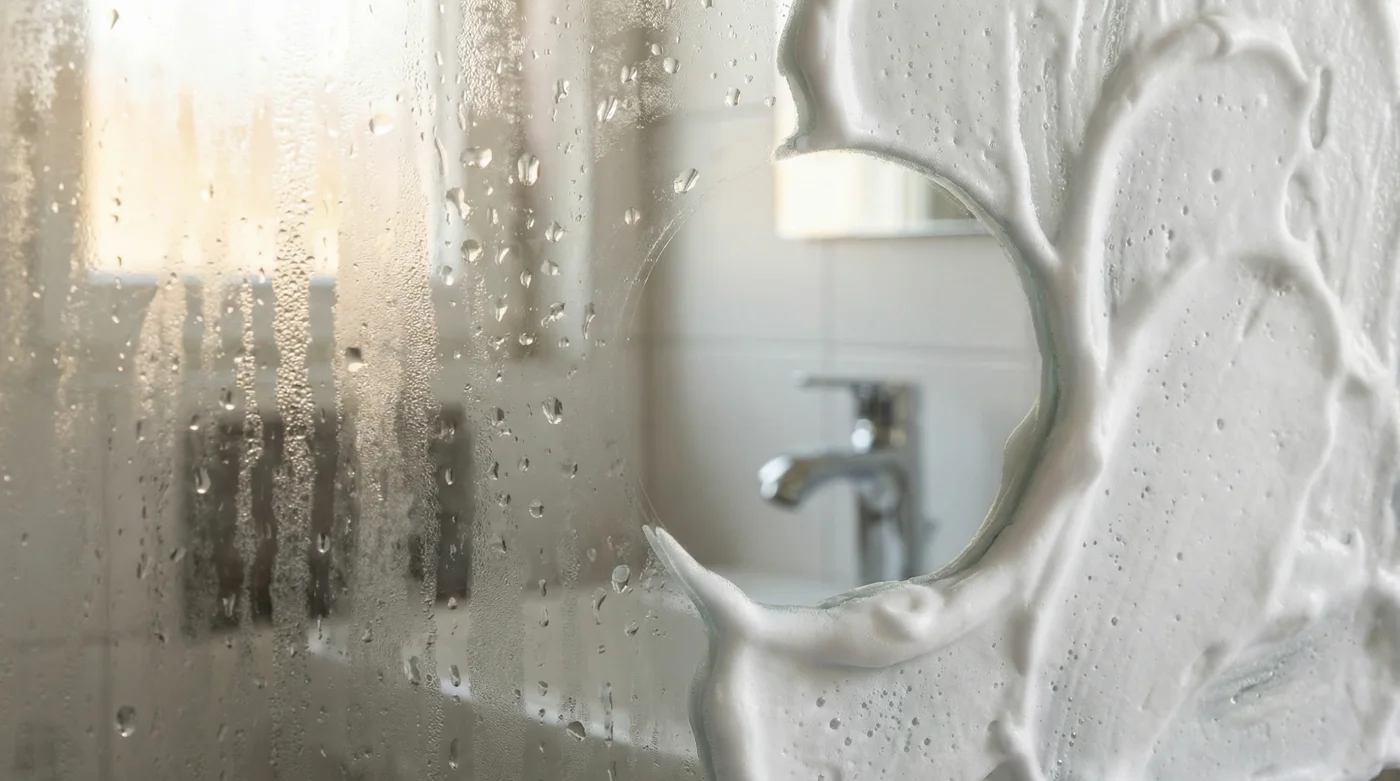
You step out of the shower, the hot water finally turning off as the hiss of the spray fades into the dripping of the faucet. The bathroom is thick with heavy humidity, settling onto the cold porcelain and clinging to the ceramic tile. You reach out, grab a damp bath towel, and swipe frantically at the bathroom mirror, desperate to see your own reflection before the morning rush begins.
It works for exactly ten seconds. Then the gray fog creeps back in from the edges, choking out the glass until you are staring at a blurred silhouette. Wiping a mirror with a wet towel is like breathing through a pillow—it only stifles the problem temporarily. Even worse, that desperate morning swipe leaves behind terrible, permanent glass streaks that calcify into a dusty grid the moment the room finally dries.
This is the daily micro-frustration millions accept as a normal part of waking up. We buy expensive bathroom exhaust fans, leave doors awkwardly cracked to the hallway, and shiver through our morning routines just to preserve a square foot of visibility for shaving or applying skincare.
But the solution is not fighting the ambient temperature of your home. The trick is altering the physical surface tension of the glass itself, using an unassuming, three-dollar aluminum can that is likely sitting right on your bathroom sink right now. Standard shaving cream.
The Chemistry of Clarity
We typically think of condensation as water clinging stubbornly to cold glass. In reality, it is microscopic water droplets forming individual beads because the glass surface allows them to grip tightly to microscopic imperfections. The water wants to pull together into tiny lenses, which scatter the light and create that impenetrable gray fog.
When you wipe a foggy mirror with a cotton towel, you are simply dragging those beads around the glass, leaving behind lint, soap scum, and mineral deposits. To stop the fog, you must stop the water beads from forming entirely. This is exactly where the latent glycerin steps in.
Shaving cream—specifically the cheap, old-school white foam—is heavily packed with glycerin and commercial surfactants. These specific ingredients are engineered to lubricate the skin and soften coarse hair, but when applied to household glass, they behave very differently.
Applied properly and buffed away, the foam leaves an invisible, microscopic barrier on the mirror. This barrier breaks the surface tension of the glass, preventing water vapor from coalescing into individual droplets. Instead of fogging, the condensation simply slides off the protective film, leaving your reflection perfectly intact no matter how hot the shower runs.
Ask David Halloway, a 62-year-old master barber running a three-chair shop in rainy Seattle. With hot towels steaming constantly and clients rushing in from the cold downpour, his massive wall mirrors used to fog up completely by noon. Decades ago, an older mentor showed him how to coat the mirrors with the same aerosol foam they used on clients’ necks. Today, David spends two minutes every Monday morning buffing his mirrors with shaving cream. His shop stays perfectly clear through ten hours of rolling steam, without a single streak in sight.
It is a quiet trick of the trade, whispered among tradesmen. Plumbers and commercial glass installers have known for years that a quick layer of cheap lather operates as a flawless, anti-fogging sealant.
Tailoring the Treatment
Not all shaving products behave exactly the same way when applied to household surfaces. Understanding what you currently have sitting in your medicine cabinet prevents a smeared, sticky mess.
For the Traditional Purist: The standard aerosol foam is your best friend here. Brands like Barbasol or Gillette Foamy contain the exact ratio of air, glycerin, and soap required to spread easily and buff off clean. The dollop of foam should tremble on the cloth, light and airy. It is light, cheap, and effective.
For the Gel User: If you prefer modern shaving gels that start blue and eventually turn into a thick lather, you need to use a significantly smaller amount. Gels are dense, heavily concentrated, and highly lubricated. A drop the size of a green pea is enough to treat the center of your vanity mirror. Any more, and you will be buffing for an hour trying to remove the oily residue.
For the Sensitive Skin: Aloe-heavy or moisturizer-rich shaving creams leave behind a greasy, persistent film. If your shaving cream boasts heavily about ultra-hydration or contains heavy botanical oils like shea butter, skip it entirely. Those extra skin-softening fats will smudge and distort the glass. Stick to the most basic, entry-level formulas for this specific task.
The One-Minute Glass Ritual
- Dawn Powerwash spray instantly lifts set carpet stains without heavy scrubbing.
- Baking soda paste permanently etches delicate non-stick frying pans during scrubbing.
- Talc-free baby powder sweeps into floorboard cracks silencing squeaky wooden steps.
- Clorox bleach spray permanently yellows white fiberglass bathtubs after three uses.
- Uncooked white rice safely cleans inaccessible narrow glass vases completely overnight.
Start by ensuring your mirror is completely dry and relatively clean of old toothpaste splatters. If you apply the foam to a wet, steamy mirror right after a shower, the water will instantly dilute the glycerin, rendering the entire protective barrier totally useless.
Dispense a dollop of foam onto a dry, clean microfiber cloth. Do not spray the foam directly onto the glass, as the pressure tends to splatter lather onto your faucet, sink, or surrounding wallpaper.
Follow this strict, simple tactical toolkit for application:
- Application Cloth: A short-nap microfiber towel (never use paper towels, which will shred and leave dust).
- The Dose: A golf-ball-sized dollop of foam for a standard vanity mirror.
- The Motion: Tight, overlapping circles working from the center outward.
- The Finish: A secondary, completely dry cloth for the final buffing phase.
Rub the foam into the glass using small circles. The mirror will temporarily cloud over entirely, looking like a hazy winter window. Keep rubbing in a rhythmic motion until the white foam mostly disappears into a thin film.
Once the heavy white lather is gone, take your second dry cloth and lightly buff the entire glass surface. You are removing the excess soap buildup while leaving the invisible layer of glycerin perfectly intact. The glass should squeak under the cloth.
Reclaiming Your Morning
Morning routines are often dictated by tiny, invisible frictions. We wait for the shower water to warm up. We wait for the coffee machine to finish brewing. We wait for the bathroom mirror to clear just so we can brush our teeth without feeling completely blind in our own homes.
Removing just one of those daily frictions changes the entire rhythm of your day. Stepping out of a boiling, steamy shower to find a perfectly clear reflection waiting for you feels surprisingly luxurious. It turns a rushed, frustrating moment into a calm, controlled transition.
You are no longer fighting the brute-force physics of humidity with a damp bath towel. You have anticipated the environment, prepared the surface ahead of time, and let simple chemistry do all the heavy lifting while you bathe.
By reimagining the utility of an ordinary object, you eliminate the daily annoyance of terrible glass streaks. A single minute of preparation buys you weeks of pristine clarity, letting you start the morning exactly how you intend to.
The best domestic solutions do not require buying a new product; they require asking a new question about a product you already own.
| Key Component | Specific Detail | Practical Reader Value |
|---|---|---|
| Latent Glycerin | Modifies the surface tension of mirror glass. | Prevents microscopic water beads from forming into visible fog. |
| Dry Microfiber | Grabs excess soap without leaving lint behind. | Ensures the mirror remains optically clear rather than cloudy. |
| Basic Aerosol Foam | Contains higher air-to-soap ratios than gels. | Requires significantly less buffing time to achieve a clean finish. |
Frequently Asked Questions
How long does the shaving cream anti-fog barrier last?
Under normal daily shower conditions, a single proper application will keep your mirror fog-free for two to three weeks before requiring a touch-up.Can I use this trick on my glass shower doors?
Yes, it works beautifully on shower doors to repel water and prevent hard water stains, though the constant direct spray of the shower will wash the barrier away much faster than on a vanity mirror.Will this damage the silver backing of my mirror?
No. Standard shaving cream is mild and non-corrosive. As long as you are not soaking the edges of the mirror where the backing is exposed to moisture, the glass surface is perfectly safe.Does this work on car windshields during the winter?
It does work to prevent interior condensation in vehicles, but be highly cautious. Any excess residue not properly buffed away can cause dangerous glare when hit by oncoming headlights at night.Why is my mirror looking smeared after applying it?
You either used too much shaving cream, used a gel instead of a foam, or did not use a secondary dry cloth to perform the final buffing stage. Wipe it down with glass cleaner and try again with half the amount.