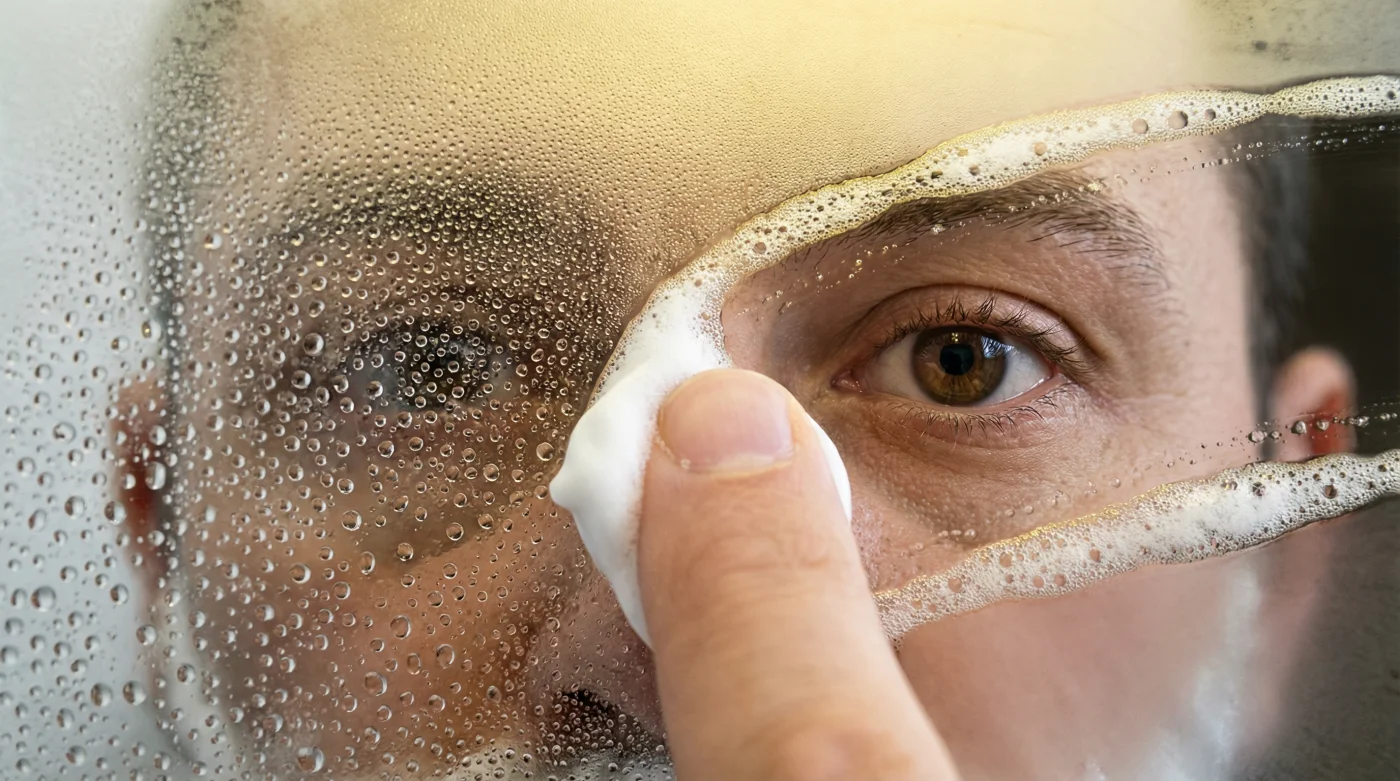
The shower shuts off, and the sudden quiet leaves you standing in a thick, warm cloud. You reach for your heavy cotton towel, instinctively wiping away the thick condensation dripping from the cold glass walls. The air is heavy with the scent of soap and hot water. But when you turn toward the sink to finish your morning routine, your bathroom mirror is nothing but a blank sheet of gray frost, completely obscuring your reflection.
It is a daily, frustrating ritual. You wipe a frantic circle with the side of your bare hand, leaving behind a smeared, streaky porthole that immediately begins to cloud over before you even pick up your toothbrush. You watch the edges blur and close in, forcing you to wipe it again. It feels like an inevitable tax on simply enjoying a hot shower on a brisk Tuesday morning.
Store shelves are crowded with specialized chemical sprays promising to banish this exact annoyance. They smell harshly of sterile laboratories, come in small plastic bottles, and cost a frustrating amount for what is essentially a temporary, high-maintenance fix. You spray them, squeegee them, and still find yourself fighting the same misty battle three days later. But the answer to a flawlessly clear reflection is likely already sitting on the edge of your porcelain sink.
The cheapest, most basic can of foaming shaving cream holds a quiet, highly effective secret. Beyond merely softening stubborn morning stubble, it houses an incidental chemical property that completely neutralizes bathroom humidity without leaving a single trace of residue behind.
The Chemistry of a Clear View
Most people view shaving cream merely as a physical cushion for a sharp steel blade. It goes on, does its brief job, and washes down the drain. But if you take a closer look at the ingredient list printed on the back of that basic aerosol can, you will spot glycerin. This unassuming, slippery compound is a highly efficient humectant, meaning it interacts directly with ambient moisture floating in the air.
Think of it like applying an invisible, breathable shield across the cold surface of the glass. When you rub shaving cream onto a mirror and physically buff it out, the soapy suds disappear completely, but the glycerin remains anchored to the surface. It creates a microscopic, transparent film that fundamentally alters the surface tension of the glass. Instead of hot steam clumping together into heavy, blinding droplets, the moisture is forced to spread out evenly, remaining completely invisible to the naked eye. What was once a daily frustration transforms into a simple, set-it-and-forget-it habit that keeps your mirror crystal clear for weeks at a time.
Arthur Pendelton, a 62-year-old high-end hotel custodian in downtown Chicago, relies entirely on this very method. Tasked with constantly maintaining the pristine, fog-free appearance of luxury penthouse bathrooms, Arthur completely abandoned commercial anti-fog liquids over a decade ago. He realized that a simple dollop of classic barbershop foam, buffed completely dry with a soft microfiber cloth, effortlessly outperformed the expensive industrial solvents every single time. It was a practical trick passed down from his grandfather, a career glass cutter, who understood that the cheapest foam contained the exact glycerin-to-soap ratio required to repel heavy condensation without ever leaving a sticky, cloudy film on the glass.
Adapting the Foam for Your Space
Not all mirrors face the exact same atmospheric challenge. Your specific approach to applying this barrier depends slightly on the layout of your washroom, the strength of your ventilation fan, and how you naturally utilize the space during your morning routine.
For the heavy steamer: If your bathroom lacks a powerful exhaust fan and you strongly prefer scalding hot water, you need to lay down a slightly thicker application. Use a shaving foam that specifically advertises sensitive skin properties, as these specific cans tend to carry a noticeably higher concentration of glycerin and soothing aloe. Work the foam vigorously into the glass until your arm genuinely feels tired, ensuring the invisible barrier is pushed deep into the microscopic pores of the mirror surface.
For the minimalist space: Perhaps you only have a small vanity mirror or a vintage medicine cabinet perched above a shallow sink. You absolutely do not need a handful of thick foam here. A tiny dollop roughly the size of an almond is more than enough to handle light condensation without smudging. Apply it gently with a soft facial tissue rather than a heavy cotton towel to keep the application remarkably light, strictly avoiding the edges where the delicate glass meets the wooden or metal frame.
Applying the Invisible Shield
- Dawn Powerwash spray instantly lifts set carpet stains without heavy scrubbing.
- Baking soda paste permanently etches delicate non-stick frying pans during scrubbing.
- Talc-free baby powder sweeps into floorboard cracks silencing squeaky wooden steps.
- Clorox bleach spray permanently yellows white fiberglass bathtubs after three uses.
- Uncooked white rice safely cleans inaccessible narrow glass vases completely overnight.
First, ensure the mirror is completely dry and perfectly free of dried toothpaste splatters or lingering room dust. You want a clean canvas before introducing any new chemical compounds to the glass, so take a moment to wipe it down with a standard glass cleaner.
Next, confidently dispense the foam. You must not use gel-based shaving products, as the heavy artificial polymers in gels will leave a streaky, cloudy mess that is difficult to wash off. You strictly need the traditional, puffy white foam that firmly holds its shape in the palm of your hand.
- Place a golf-ball-sized amount of foam directly onto a clean, dry microfiber cloth.
- Smear the thick cream onto the glass in broad, sweeping circles, covering every inch.
- The mirror will immediately look terribly cloudy—this is exactly what you want to see.
- Keep buffing the surface with the dry side of the cloth until the white haze completely vanishes.
The glass will squeak slightly as the glycerin layer firmly sets into the surface. Once the reflection is sharp again, the invisible barrier is completely active and ready to face the intense steam of your next shower.
To guarantee the best results, keep your supplies minimal and purposeful. The Tactical Toolkit:
- Product: Basic aerosol foaming shaving cream (strictly avoiding all gel variants).
- Applicator: A dedicated dry microfiber cloth or a tightly crumpled paper towel.
- Maintenance interval: Reapply every two to three weeks, or when the outer edges of the glass begin to fog slightly.
Reclaiming Your Morning Rhythm
Removing a small, recurring daily annoyance from your morning routine always has a surprisingly cascading effect on the rest of your day. It is rarely just about the glass itself. It is about preserving the calm of that quiet, early-hour space before the chaotic rush of the workday officially begins.
When you finally step out of the comforting warmth of the shower and immediately catch your perfectly clear reflection, you skip the frantic manual wiping and the streaky aftermath entirely. The leftover glycerin is quietly doing the invisible heavy lifting for you, silently repelling the heavy humidity while you comfortably dry off.
It is a comforting realization that some of the most highly effective household solutions are not found in the expensive specialty aisles, but rather hidden in plain sight right on your counter. You regain a few precious moments of unbroken peace, allowing you to start the morning with a clear view, both physically and mentally.
“The simplest compounds often solve the most persistent household frustrations, provided you understand how to leverage their hidden properties.”
| Method | Application Detail | Added Value for You |
|---|---|---|
| Daily Towel Wiping | Requires manual wiping after every single shower. | Leaves streaks, creates unnecessary laundry, and fogs up again quickly. |
| Chemical Anti-Fog Sprays | Expensive liquids applied with specific synthetic sponges. | Often possess a strong, clinical odor and require frequent repurchasing. |
| Foaming Shaving Cream | A single, golf-ball-sized dollop buffed dry once a month. | Utilizes leftover glycerin to keep the mirror flawlessly clear for weeks at zero extra cost. |
Common Questions About the Glycerin Barrier
Can I use shaving gel instead of foam?
No. Gels contain different heavy lubricants and polymers that will leave a thick, cloudy residue on your mirror instead of a clean, clear barrier.How long does the anti-fog effect actually last?
Typically, a single proper application will keep your mirror entirely fog-free for two to three weeks, heavily depending on the ventilation in your washroom.Will this damage my mirror or the silvering on the back?
Not at all. The foam only sits lightly on the exterior glass surface, acting as a gentle, breathable humectant shield without penetrating the glass itself.Can I use this trick on my car windshield or eyeglasses?
While it works moderately well on eyeglasses, it is best kept inside the house. Automotive glass faces extreme temperature shifts that can cause the glycerin to smear dangerously under windshield wipers.Do I need to wash the mirror before reapplying the foam?
Yes. A quick wipe down with standard glass cleaner removes ambient room dust and old glycerin, giving you a fresh, bare canvas for the next application.