Walk down the laundry aisle of any American supermarket, and the air hits you like a heavy, floral wall. Neon-colored plastic jugs line the shelves, promising spring breezes and mountain mornings. You lug a heavy plastic bottle home, pour the thick, blue liquid into your machine’s dispenser, and accept this as just another fixed monthly expense. It is a chore performed on autopilot, pouring a viscous syrup over your family’s daily wear.
But pull a freshly dried towel from the basket, and you might notice a strange reality beneath the strong perfume. That synthetic fragrance masks a fabric that feels strangely slick, almost greasy to the touch. You are caught in a monthly chemical subscription, paying retail prices to slowly waterproof your own bath towels and suffocating the expensive fibers of your athletic gear.
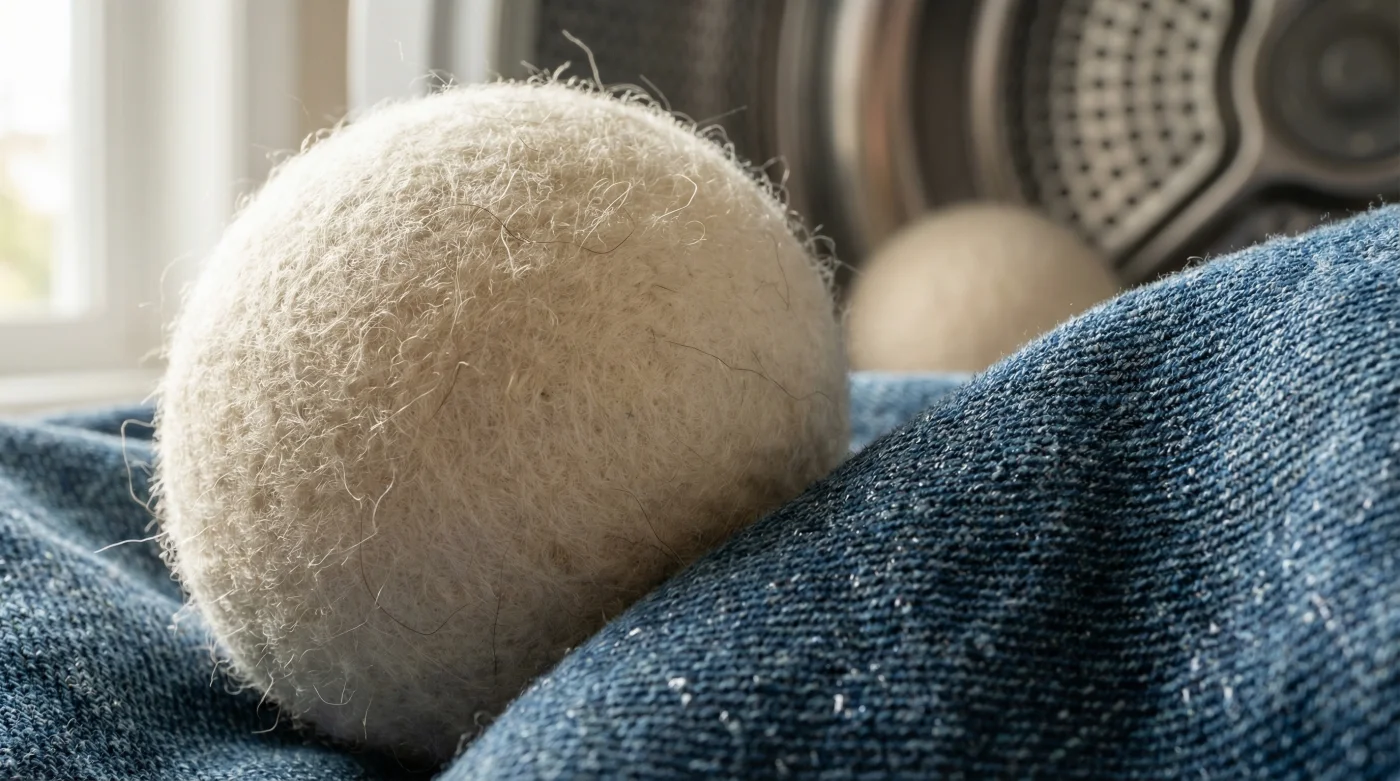
There is a quieter, radically simpler alternative currently tumbling away in laundry rooms across the country. It involves zero plastic waste, no artificial fragrances, and requires a purchase you will make exactly once every three to five years. Imagine six pale, dense spheres of compacted sheep’s fleece tossing rhythmically in the dark drum of a hot dryer.
These natural wool spheres physically separate wet layers of heavy clothing as they tumble over each other. By forcing channels of hot air between thick cotton fibers, they drastically cut down your machine’s running time. You immediately break the expensive purchasing cycle for good, replacing a liquid consumable with a solid, permanent tool.
The Physics of True Softness
The marketing behind liquid softeners relies on a fundamental misunderstanding of how textiles work. When you pour that thick liquid into your washing machine, you aren’t actually relaxing the cotton or linen threads. You are simply coating them. Most commercial softeners rely on quaternary ammonium compounds—often derived from heavy animal fats—to leave a microscopic layer of slime over your clothes to trick your fingers into feeling a false softness.
This is exactly why your synthetic gym shirts hold onto stubborn sweat odors and your kitchen dish towels just push spilled water uselessly across the counter. The woven fabric is suffocating under a waxy barrier. Over time, this buildup traps moisture against the base layer of the threads, becoming a breeding ground for invisible mildew.
The logic behind investing once in wool dryer balls pivots away from chemical coating entirely, moving toward the benefits of mechanical agitation. As the dense, baseball-sized wool spheres bounce off the metal walls of the drum, they act like dozens of gentle, tiny fists kneading the stiffness out of wet jeans and heavy bed sheets.
Instead of flattening wet, heavy items into a massive, slow-drying clump, the bouncing balls actively force physical space between the tumbling garments. Dry hot air circulates instantly through these gaps, meaning you save real money on electricity while allowing your woven clothes to dry evenly and breathe freely.
Consider the daily routine of Sarah Jenkins, a 42-year-old textile conservator working with fragile vintage fabrics in a quiet Boston studio. She spends her work weeks meticulously restoring delicate heirloom quilts and mid-century garments that have somehow survived decades of harsh wear. The fastest way to ruin a natural fiber, she notes, is to trap it under a heavy synthetic slick that prevents the material from expanding.
Sarah relies exclusively on mechanical softening to restore a natural drape to fragile historical garments. She compares the tumbling action of wool spheres to beating cloth on river rocks, a centuries-old method of textile care that softens heavy weaves rapidly without ever degrading the raw, underlying material.
Adjusting for Your Laundry Reality
Not every basket of wet, tangled laundry requires the exact same approach to drying. Acknowledging the specific friction, fabric type, and weight of what you are washing ensures these natural wool tools perform perfectly every single time you press start.
For the Scent Loyalist: If you genuinely miss the heavy fragrance of commercial liquids, you hold the power to customize your routine safely. Ten minutes before your drying cycle ends, drop three drops of natural lavender or sweet orange essential oil directly onto the balls to bake scent into the fibers without leaving a greasy residue behind.
For the Heavy Loader: When you cram the drum full of heavy winter denim, thick bath mats, or a massive king-sized duvet, three little spheres will get entirely lost in the chaos. You need to double your fleet. Using six or even eight balls offers enough physical mass to punch through the heavy, tangled legs of wet jeans.
- Dawn Powerwash spray instantly lifts set carpet stains without heavy scrubbing.
- Baking soda paste permanently etches delicate non-stick frying pans during scrubbing.
- Talc-free baby powder sweeps into floorboard cracks silencing squeaky wooden steps.
- Clorox bleach spray permanently yellows white fiberglass bathtubs after three uses.
- Uncooked white rice safely cleans inaccessible narrow glass vases completely overnight.
The Mindful Toolkit
Transitioning away from a lifetime of purchasing heavy plastic jugs requires just a slight shift in your daily mechanical routine. You are permanently swapping a messy, sticky liquid pour for a one-time, satisfying toss into the drum.
You can simply leave the soft spheres living permanently inside the warm dryer drum. There is absolutely no need to fish them out of clean sheets or store them in a dedicated, special basket on the shelf. They simply wait for the next load, ready to go to work the moment the door clicks shut.
To maintain peak efficiency over the lifespan of your natural tools, follow a minimalist checklist for your mechanical setup.
- Use three balls for standard clothing loads and six for bulky, heavy bedding.
- Check the spheres for severe surface pilling or shrinking after roughly a thousand drying cycles.
- If they begin to look overly compact and dense, run them through a hot water wash cycle inside an old sock to properly re-fluff the wool.
- Always try to keep synthetic fleece loads completely separate to avoid transferring loose static charges to your natural cottons.
This quiet, tactical simplicity means you never again have to write liquid fabric softener on a crowded grocery list. You have successfully engineered a permanent, physical laundry solution that respects both your wallet and the integrity of your clothing.
Restoring Your Wardrobe’s Breathability
There is a very quiet, satisfying peace in actively stepping away from a manufactured household necessity. Watching those neon plastic jugs finally disappear from your crowded utility shelf opens up much-needed physical space, but it also creates a subtle mental clarity.
You stop constantly worrying about mysterious skin irritations caused by lingering synthetic perfumes rubbed against your skin all day. Your expensive, highly technical athletic wear finally wicks sweat away from your body properly, rather than trapping heat and old odors beneath a microscopic wall of animal fat.
Genuine fabric softness finally becomes an honest texture again, born from clean fibers flexing naturally in the warm heat. It feels much less like wearing a synthetic chemical coating, and infinitely more like wrapping yourself in the raw, honest comfort of the fabric itself.
Over time, you begin to realize that you never actually needed to buy a feeling of softness squeezed out of a plastic bottle. True, lasting comfort was always simply about giving your clothes room to breathe.
Physical agitation respects the integrity of a woven thread, while chemical soaking slowly suffocates it.
| Key Point | Detail | Added Value for the Reader |
|---|---|---|
| Mechanism | Mechanical pounding vs. Chemical coating | Towels absorb water instantly. |
| Cost | $15 every few years vs. $10 every month | Keeps hundreds of dollars in your pocket. |
| Drying Time | Separates wet layers for hot air | Cuts your utility bill and saves 20 minutes per load. |
Frequently Asked Questions
Do wool dryer balls make a lot of noise? They create a low, rhythmic thumping against the drum, which blends easily into the background hum of the machine.
Will they leave white fuzz on my dark clothing? High-quality, densely felted wool spheres do not shed fibers onto your dark shirts or black jeans.
How do I know when it is time to replace them? When they begin to look severely shaggy, shrink to half their original size, or lose their density, their mechanical softening power has faded.
Can I use them safely with delicate fabrics? Yes, they are completely safe for standard loads, though you should avoid tumbling highly fragile lace or silk under heavy heat anyway.
Why do I still have static cling in the winter? Static is caused by over-drying your garments. Reduce your machine’s cycle time by at least ten to twenty minutes.