You flush the silver handle, and instantly, the acoustics in the bathroom shift. Instead of the familiar, hollow gulp of rushing water, there is a suffocated, ominous gurgle. You watch, heart sinking, as the waterline slowly creeps upward, threatening to breach the porcelain rim and ruin the entire morning. The immediate instinct is to panic, grabbing whatever towels are nearby to build a protective dam around the base of the fixture.
Brute force feels absolutely necessary when you are staring down a flooded bowl. You instinctively grab the rubber plunger hidden behind the trash can, bracing yourself for a splashing, unsanitary fight. The rhythmic, forceful plunging usually just creates a hazardous spray across your bath mat, turning a contained plumbing issue into a full-scale bathroom decontamination project.
There is a quieter, infinitely cleaner way to handle this stressful moment. It requires stepping back, breathing through the frustration, and letting simple household chemistry do the heavy lifting. The secret is sitting right next to your kitchen sponge, waiting to turn a frustrating plumbing nightmare into a quiet, hands-free resolution.
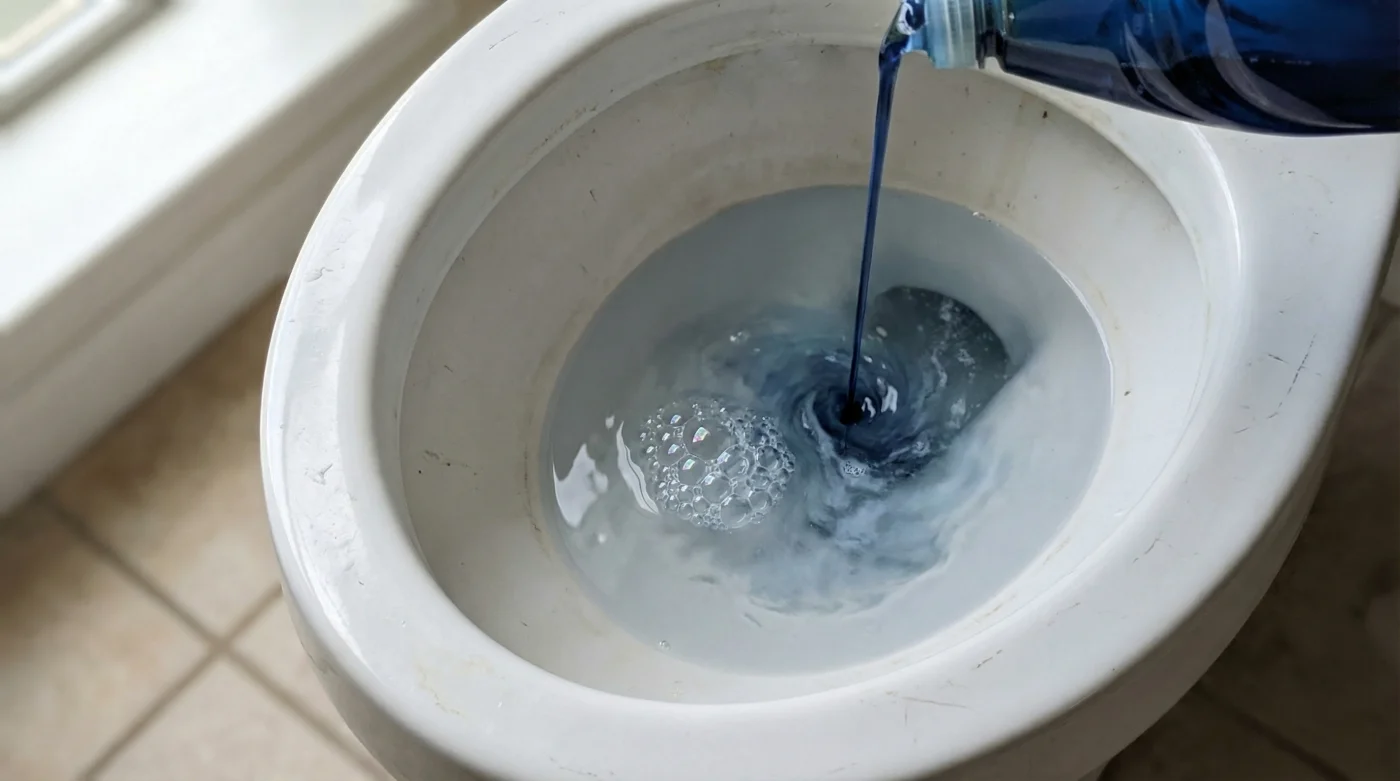
You create a slick barrier by pouring a heavy dose of liquid dish soap directly into the bowl. You aren’t just adding bubbles to the water; you are actively altering the environment of the pipe. The soap coats the porcelain and the hidden trapway, robbing the blockage of its friction so that what normally requires aggressive plunging simply slips cleanly through your plumbing.
The Physics of the Slip
Think of your toilet’s internal plumbing not as a straight, vertical drop, but as a curved, narrow throat. When a dense mass of paper and waste gets caught in the tight curve of the ‘S’ or ‘P’ trap, the water sitting above it acts like a weighted blanket. It presses the mass harder against the dry, unyielding walls of the pipe, creating a watertight seal.
You fight pure friction with every downward thrust of a standard plunger. Trying to force it through mechanically is like trying to shove a dry rubber stopper into a narrow glass bottle. The pressure often compacts the mess even further into the bend, wedging it tighter into the porcelain throat and making the clog significantly worse.
The perspective shift happens when you stop treating the clog as an enemy to be battered, and start treating it as a stuck wooden drawer that desperately needs lubrication. Dawn dish soap is specifically engineered with powerful surfactants to break down lipids, greases, and dense organic matter, but its true structural advantage here is its heavy density.
It seeps into the blockage because it is significantly heavier than the water surrounding it. A thick pour of the blue soap will sink directly to the bottom of the bowl, pooling exactly where the pressure point exists. It coats the pipe walls with a high-viscosity layer of slime, transforming a stubborn, dry obstruction into a slick, easily displaced mass.
Marcus Thorne, a 48-year-old master plumber who has spent two decades unclogging the aging cast-iron pipes of Chicago’s historic greystones, calls this his preferred first-line magic trick. Homeowners routinely call him in an absolute panic, ready to pay steep emergency weekend rates after breaking a sweat and ruining their rugs with a flimsy cup plunger.
He asks for dish soap and a bucket of warm water the moment he walks through the door. Marcus explains that ninety percent of common household toilet clogs aren’t catastrophic structural failures or tree root invasions; they are simply temporary friction locks. A heavy glaze of Dawn breaks that friction lock safely, without risking blowout damage to the delicate wax ring seal at the base of the toilet.
Assessing the Blockage Landscape
Not every plumbing stall behaves exactly the same way, and properly reading the resting water level will dictate exactly how you deploy this soap method. Understanding the subtle differences in your bowl’s water dynamics prevents accidental overflows and ensures the soap reaches the core of the problem.
Do not flush the handle if you are facing a High-Water Panic. If the water is brimming a mere quarter-inch from the seat, you have absolutely zero room for error or additional liquid. You must let evaporation and slow, microscopic seepage lower the level over a few hours before attempting the soap method, or put on gloves and manually bail out a few cups of water using a disposable plastic container.
For the Slow Drainer scenario, the bowl fills ominously high upon flushing but slowly drains out over ten to fifteen minutes, leaving behind the original paper mess. This is the absolute ideal scenario for the dish soap trick. The partial opening in the pipe means the heavy soap will funnel directly into the core of the clog, lubricating the exact point of maximum resistance.
- Dawn Powerwash spray instantly lifts set carpet stains without heavy scrubbing.
- Baking soda paste permanently etches delicate non-stick frying pans during scrubbing.
- Talc-free baby powder sweeps into floorboard cracks silencing squeaky wooden steps.
- Clorox bleach spray permanently yellows white fiberglass bathtubs after three uses.
- Uncooked white rice safely cleans inaccessible narrow glass vases completely overnight.
Mindful Application and the Tactical Toolkit
Executing this technique properly requires a bit of deliberate patience. You are successfully swapping physical labor and sweat for chemical reaction time. Gather your original blue liquid dish soap, a sturdy bucket, and prepare to work slowly and purposefully.
Watch the heavy blue liquid sink rapidly to the bottom as you pour roughly half a cup of Dawn directly into the standing water, aiming specifically for the center drain hole. Let it sit completely undisturbed for at least twenty to thirty minutes. This waiting period is entirely non-negotiable; the surfactants need real time to penetrate the organic matter and completely coat the porcelain trapway.
Next, you must prepare your thermal kicker. You need hot water to activate the soap and soften the waste, but using actively boiling water is a catastrophic mistake that can instantly crack a cold porcelain toilet bowl, turning a clog into a flooded floor.
- Turn your bathtub or bathroom sink faucet to its absolute hottest setting.
- Fill a large cleaning bucket or a tall kitchen pitcher with about one gallon of this hot tap water (ideally around 110 to 120 degrees Fahrenheit).
- Stand directly over the bowl and pour the hot water steadily from about waist height.
- Aim the stream directly at the drain hole to create a forceful, heavy, manual current.
The gravitational weight of water combined with the slick soap barrier and the thermal heat will suddenly push the blockage through the pipe. You will hear a deeply satisfying, rapid suction sound as the bowl clears itself completely, pulling the water down in a powerful vortex.
If the water drops but doesn’t completely clear on the first pour, simply repeat the process. Add a little more soap, wait another fifteen minutes, and pour another bucket of hot tap water. The compound effect of the second application almost always breaks the remaining friction grip, leaving you with a perfectly functioning fixture.
Reclaiming the Sanctuary
You trade panic for process when you understand the mechanics of your home. Your bathroom should be a place of restoration, privacy, and quiet morning routines, not a stressful staging ground for messy plumbing battles. There is a very specific kind of domestic anxiety that flares up when the fixtures we rely on most intimately suddenly fail us.
Mastering this simple, friction-breaking technique permanently removes that anxiety from your daily life. Knowing exactly how to handle a common, embarrassing inconvenience without resorting to frantic, messy labor changes the way you view household maintenance. You are no longer at the mercy of a plastic plunger.
Your floor remains completely dry and your dignity remains perfectly intact. By simply keeping a spare bottle of concentrated dish soap tucked under the bathroom vanity, you are always prepared to solve the problem cleanly, calmly, and highly effectively. It is a small, quiet victory over the unpredictability of homeownership, ensuring your plumbing flows exactly as it should.
“A plunger fights the symptom, but a heavy pour of soap and time dissolves the actual mechanics of the problem.” — Marcus Thorne, Master Plumber
| Key Point | Detail | Added Value for the Reader |
|---|---|---|
| Friction Reduction | Soap coats the porcelain trapway with a slick barrier. | Eliminates the need for aggressive, messy plunging. |
| Thermal Kicker | 110°F-120°F tap water softens dense organic matter. | Speeds up the breakdown without risking cracked porcelain. |
| Density Advantage | Dawn is heavier than water, sinking to the pressure point. | Targets the exact location of the clog automatically. |
Frequently Asked Questions
Can I use boiling water instead of hot tap water?
Absolutely not. Boiling water causes rapid thermal expansion, which can instantly crack cold porcelain and ruin the entire toilet fixture. Always use hot tap water from the sink.Will any brand of liquid dish soap work?
While other liquid soaps will provide some lubrication, classic Dawn is preferred by professionals because of its high concentration of surfactants designed specifically to break down dense lipids and greases.How long should I let the soap sit before pouring water?
Patience is key. Allow the soap to rest at the bottom of the bowl for at least 20 to 30 minutes so it can fully permeate the blockage and coat the internal pipes.What if the water level is already at the very top of the rim?
Do not add anything else. Let the water naturally seep down over a few hours, or manually bail some out into a bucket before adding the soap and hot water.Is this method safe for septic systems?
Yes. Liquid dish soap is perfectly safe for your plumbing lines and septic system, and is far gentler on your wax ring than harsh chemical drain cleaners or mechanical augers.